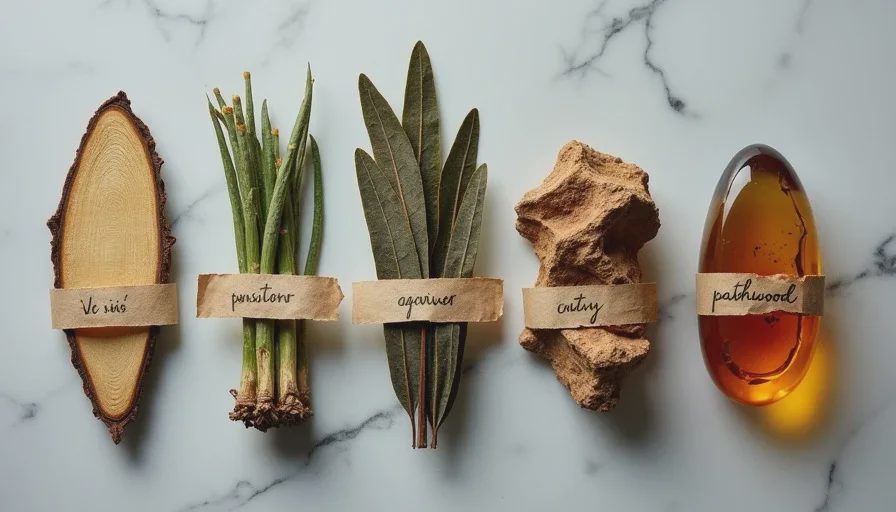
When I first got into fragrance, perfume notes explained in reviews might as well have been in another language. I'd read "a prominent iris heart with a vetiver base and touches of oud" and have no idea what I was supposed to imagine. I'd nod along. I'd buy the sample. I'd smell it and think, "This doesn't smell like any flower I know." Because it isn't one. Eight years later, I want to save you the confusion I went through. Here are five notes that scare beginners, what they actually smell like, and how to say their names without feeling foolish at a fragrance counter.
The Five Notes That Confuse Everyone
These five notes show up constantly in fragrance descriptions, and they're the ones I get asked about most. Consider this perfume notes explained, the plain way I wish it had been given to me. I'm going to cover what they smell like, why the names feel intimidating, and a simple pronunciation that'll get you through any boutique conversation.
Iris — Not a Flower, a Root
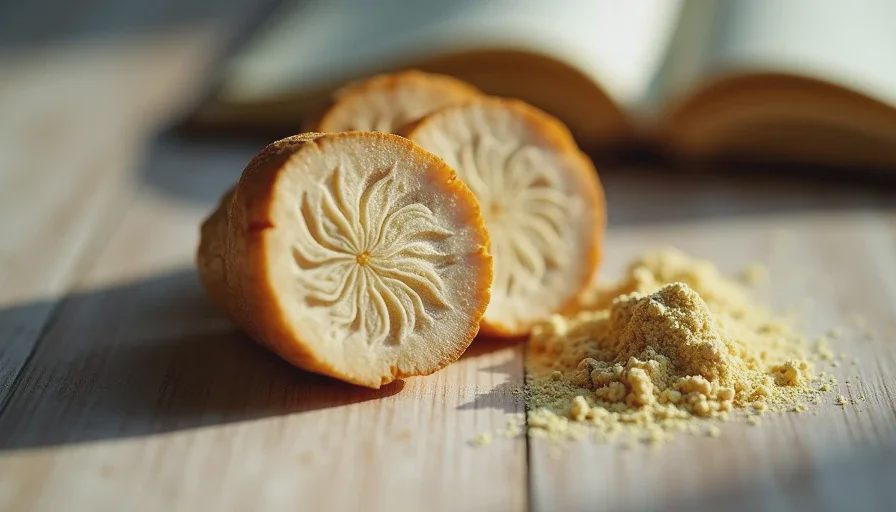
Let's start with the one in the title. Iris in perfumery doesn't come from the flower petals. It comes from the rhizome — the root — of the iris plant, specifically iris germanica. The material is called orris root, and it's one of the pricier ingredients in perfumery because the roots have to dry for three to five years before they're useful.
Here's what it actually smells like:
Powdery — like high-quality face powder, not baby powder
Buttery — a soft, fatty richness underneath the powder
Slightly woody — like sandalwood that's been sanded smooth
Cold — there's a chill to it, like walking into a room with marble floors
Pronunciation: EYE-riss (the "I" is long, like the flower's name — not "earis" or "ih-riss").
If you've smelled something and thought "this smells expensive and powdery and a little like lipstick," that's iris. It's not a fresh, breezy floral. It's a composed, textured, root-driven note that feels the way cashmere sounds.
Vetiver, Oud, Patchouli, and Ambroxan
The other four notes that trip people up are vetiver, oud, patchouli, and ambroxan. Each has a reputation that's either intimidating or misleading. Let me break them down the way I wish someone had explained them to me when I started. This is perfume notes explained without the gatekeeping.
A Quick Reference Guide
Note | Pronunciation | What It Actually Smells Like | Common Misconception |
|---|---|---|---|
Vetiver | VET-iv-er | Earthy, smoky, grassy — like wet soil and dried hay | "It smells like dirt" — it's far more complex than that |
Oud | OOD (rhymes with "food") | Warm, woody, resinous, slightly medicinal | "It's overwhelming" — well-made oud is balanced |
Patchouli | puh-CHOO-lee | Earthy, sweet, dark — like dark chocolate and damp leaves | "It's a head shop smell" — it's a perfumery staple |
Ambroxan | am-BROX-an | Warm, amber, slightly salty — like clean skin after the beach | "It's synthetic, so it's bad" — it's a masterful molecule |
Let me go deeper on each.
Vetiver is a grass root, grown mainly in Haiti and Java. If you've ever smelled wet earth after rain in a garden, that's the edge of vetiver. It's grassy but not fresh-cut-lawn grassy — more like dried grass that's sat in the sun, with smoke underneath. In my testing, vetiver-based fragrances thrive in heat. They feel alive in summer in a way citrus can't sustain. If you want to understand vetiver, smell it on paper first — on skin it shifts dramatically depending on your chemistry.
Oud comes from agarwood trees that have been infected with a specific mold. The tree produces resin to fight the infection, and that resin is oud. It's warm, woody, and carries a medicinal quality that reminds me of the herbal cabinet in a traditional medicine shop. Real oud is deep and complex. Synthetic oud, which most fragrances use, is more approachable but loses some of that strangeness. If real oud feels like too much, that's normal — it's an intense note. Start with fragrances that use it as a supporting player, not the lead.
Patchouli is a leaf, and it's one of the most misunderstood notes in perfumery. People associate it with the 1960s or with head shops, but in skilled hands, patchouli is dark, sweet, and earthy in a way that's almost edible. I think of it as the dark chocolate of fragrance notes — bitter and sweet at once, rich, grounding. It pairs beautifully with rose, vanilla, and amber. On my skin, patchouli lasts forever. It's one of the few notes still clearly present at the twelve-hour mark.
Ambroxan is a synthetic molecule created to replicate ambergris, a substance produced by sperm whales — but modern ambroxan is made in a lab, no whales involved. It smells warm, slightly salty, and skin-like. If you've ever caught a whiff of someone and thought "they smell like clean, warm skin," there's a good chance ambroxan was involved. It's transparent — it doesn't smell like a specific thing the way rose or cedar do. It smells like an aura.
Tried it. Lived with it. Then I'll tell you if it's worth it. — And what it's worth, in this case, is your time. Understanding these five notes will unlock most of the fragrance descriptions you'll ever read.

How to Actually Learn These Notes
Reading about notes is like reading about food. You eventually have to taste it. No amount of perfume notes explained on a page will teach you as fast as one afternoon with the real materials. Here's how I'd approach learning these five:
Get a sample of each note in near-isolation. Ask a boutique for a vetiver-forward scent, a simple iris, a basic patchouli. Smell them on paper strips first.
Test on skin within the same day. Paper tells you what the note is. Skin tells you what the note becomes on you.
Smell at intervals. Don't sniff once and move on. Check back in an hour, three hours, six hours. Notes reveal themselves over time.
Keep a notebook. Write down what you smell in your own words — not "woody-floral accord" but "smells like my grandma's wooden drawer." Your own language will help you remember.
Smell the living plants. Find real patchouli at a plant store if you can. Smell real iris at a garden center. I grow rosemary and thyme on my windowsill — training your nose on living plants makes you better at recognizing their cousins in fragrance.
Fragrance doesn't need to be intimidating. The vocabulary exists to help you describe what you're smelling, not to make you feel like an outsider. Once you know what iris, vetiver, oud, patchouli, and ambroxan actually smell like, you'll read fragrance descriptions differently. You'll know what you're getting into before you spray. And more importantly, you'll know what you like — in your own words, on your own skin.




No comments yet — be the first to share a thought.