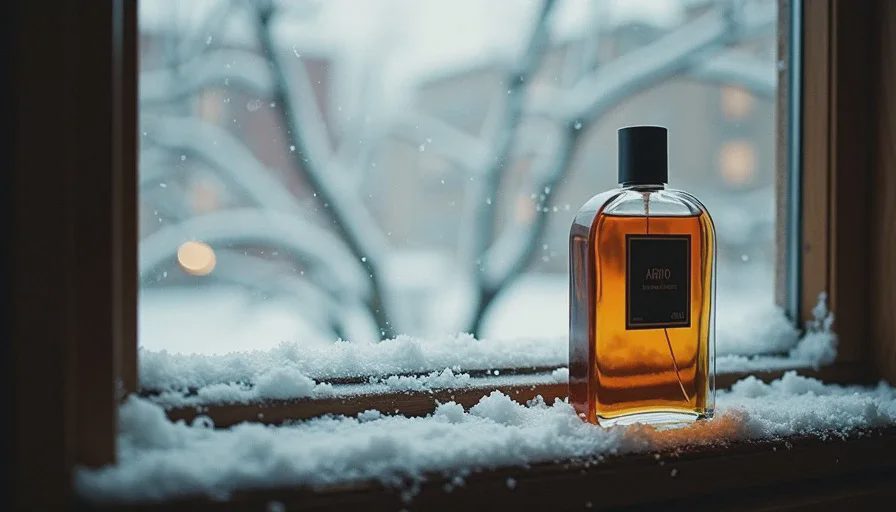
Understanding how perfume smells different on skin starts with realizing that skin is not a constant. I learned this by accident. I had a bottle I loved in December — wore it every week, received compliments, felt like it was "my scent." Then March arrived, and something was off. The fragrance felt thinner, almost sour on me. By July, it was unrecognizable. Same bottle, same skin, same application method. The only thing that changed was the climate. This is the story of what happened when I tested one fragrance across three Chicago seasons, and what it taught me about how perfume smells different on skin in different conditions.
The Setup: One Bottle, One Year, Three Seasons
I picked a fragrance I knew well — a woody aromatic with citrus top notes, a lavender-rosemary heart, and a vetiver-cedar base. It was something I had worn for over a year already, so I had a baseline. I committed to wearing it at least twice a week for a full year, in Chicago's winter (January-February), spring (April-May), and summer (July-August).
The Testing Method
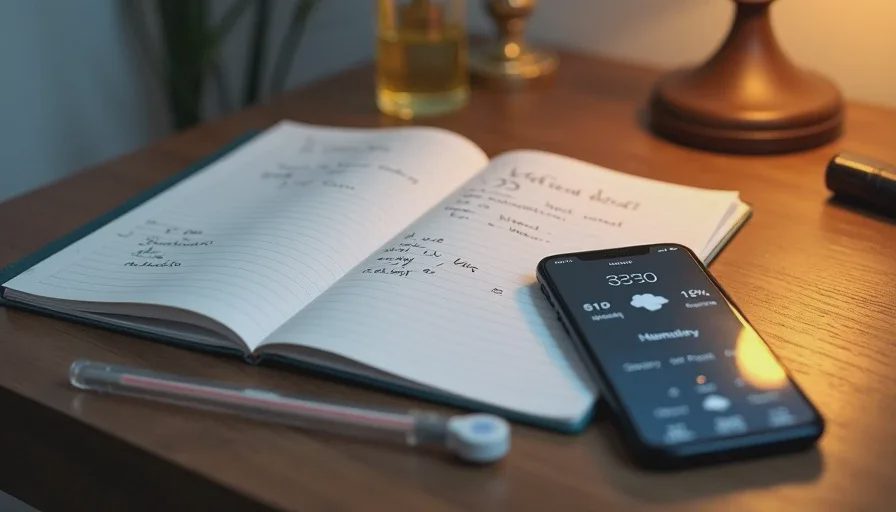
I tracked five variables across every wear:
Temperature at application — Checked on my phone right before spraying
Humidity — Same source, noted alongside temperature
Time until first dry-down shift — When the top notes faded and the heart emerged
Total longevity — When the fragrance was no longer detectable on skin
Nate's reaction — His unscripted first impression, asked without warning
I sprayed two sprays on the same spot (left wrist, then neck) every time. Same shower routine, same unscented moisturizer. I wanted to control everything I could so the climate was the variable.
The Winter Results
Chicago winter is cold and dry. My skin was dry too, despite moisturizer, and the fragrance behaved accordingly.
Metric | Winter Result |
|---|---|
Temp at application | 12-28°F |
Humidity | 30-45% |
Top notes lasted | 15-20 minutes |
Heart notes lasted | 3-4 hours |
Total longevity | 7-8 hours |
Projection | Moderate, close to skin after hour 1 |
Nate's reaction | "Smells like a fireplace. In a good way." |
The citrus top notes barely registered in winter. They were gone before I left the apartment. What dominated was the woody base — vetiver and cedar stretched out and warm, like they had nowhere to rush. The fragrance felt dense, cozy, and slightly smoky. I loved it.
The Spring Shift: Everything Wakes Up
Spring in Chicago is unpredictable. One day it is 40°F and overcast, the next it is 68°F and sunny. This is where the fragrance started to transform, and where I really understood how perfume smells different on skin when conditions shift.
What Changed
The most dramatic difference was the heart notes. In winter, lavender and rosemary were background players. In spring, with warmer skin and slightly higher humidity, they stepped forward. The fragrance went from "cozy fireplace" to something greener, more aromatic, almost herbal.
Metric | Spring Result |
|---|---|
Temp at application | 48-68°F |
Humidity | 50-65% |
Top notes lasted | 30-45 minutes |
Heart notes lasted | 4-5 hours |
Total longevity | 6-7 hours |
Projection | Stronger in first 2 hours, then settled |
Nate's reaction | "Is this the same one? It smells different. Greener." |
Nate noticed without being prompted. That told me the shift was real, not something I was imagining because I was looking for it. The citrus top notes also came alive in spring — they had a brightness and sparkle that was completely absent in January. It was like the fragrance had been sleeping and finally woke up.
But there was a downside. In warmer, more humid spring weather, the fragrance developed faster. The beautiful slow burn of the base notes that I loved in winter was compressed. The vetiver-cedar dry-down that lasted hours in January was a brief cameo in May. I was getting more variety up top but less of the base I adored.
The Humidity Factor
One particular April day stands out. It was 65°F but 78% humidity — a damp, heavy Chicago spring day. The fragrance turned slightly sweet on my skin in a way I had never experienced before. The lavender, which is usually clean and herbal on me, took on a syrupy quality. It was not bad, but it was different enough that I questioned whether I had grabbed the wrong bottle.
That is the thing about how perfume smells different on skin. It is not just temperature. Humidity plays a massive role, and it interacts with your skin's own chemistry in ways that are hard to predict from a paper strip test.
The Summer Reality: Heat Changes Everything
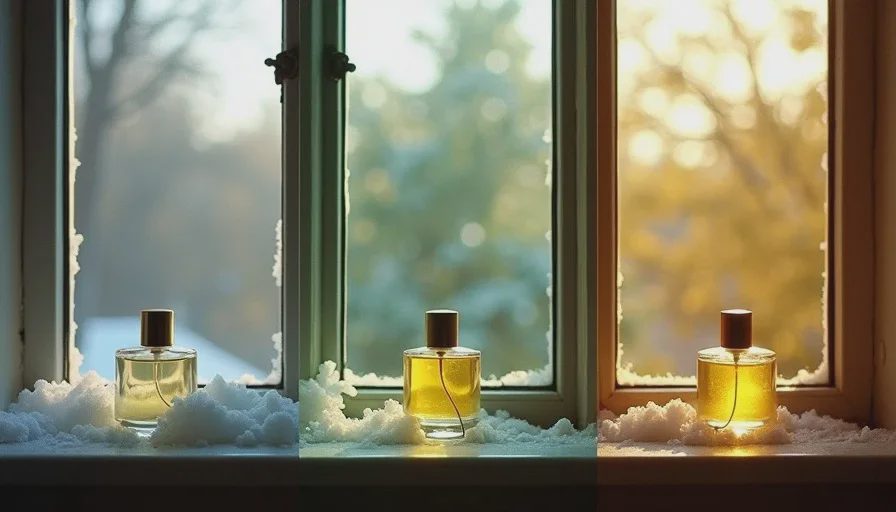
By July, the fragrance was a different animal entirely. Chicago summer is hot and humid — 85°F with 70%+ humidity on a typical day. My skin was warmer, slightly more oily, and the fragrance responded.
The citrus top notes exploded. They were vivid, juicy, and lasted a full hour — longer than in any other season. But the woody base that I loved? It was almost gone. The vetiver collapsed into something flat, and the cedar lost its structure. What remained after two hours was a thin, vaguely herbal cloud that was pleasant but forgettable.
Tried it. Lived with it. Then I'll tell you if it's worth it. — The same bottle that felt like a signature scent in winter felt like a compromise in summer. Not bad, just not the same fragrance I had fallen for.
The Year-Over-Year Lesson
After twelve months of tracking, here is what I learned about how perfume smells different on skin across seasons:
Cold, dry air slows down development and emphasizes base notes. Fragrances feel denser and last longer.
Warm, humid air accelerates everything. Top notes sing, but bases collapse. Longevity drops.
Transitional seasons (spring, fall) give you the most balanced experience, but also the most unpredictable one.
Your skin changes too — oilier in summer, drier in winter — and that is a separate variable from the air itself.
The takeaway is not that you need a different fragrance for every season, though many people enjoy rotating. The takeaway is that if you test a fragrance once, in one season, you are seeing one version of it. The bottle contains more possibilities than a single wearing can reveal. Test it in cold. Test it in heat. Give it a year if you can. Your skin is a living surface, and it will tell you things a paper strip never will.



No comments yet — be the first to share a thought.