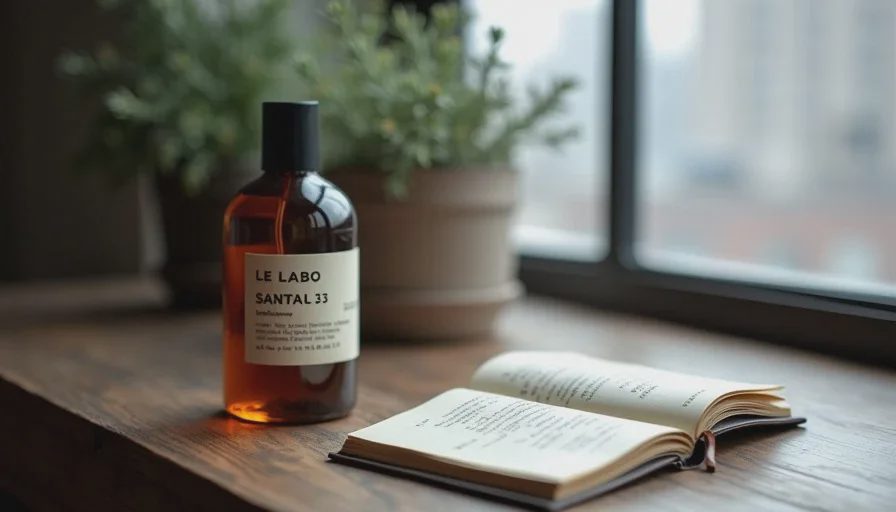
This is a perfume longevity test that took eight years, four seasons, and more repeat wears than I can count. I'm Claire, and Santal 33 by Le Labo is one of the few bottles I've owned continuously since 2018. I've gone through two full bottles and several decants. I've worn it in Chicago's humid summers, its bitter Januarys, on clean skin and after a long day, on my wrist and on my clothes. This isn't a counter review. This is what Santal 33 actually does.
What It Smells Like — Really
Santal 33 smells like sandalwood that's been left in a room with leather and old paper, and on my skin, that's exactly where it lives.
The Dry-Down Evolution
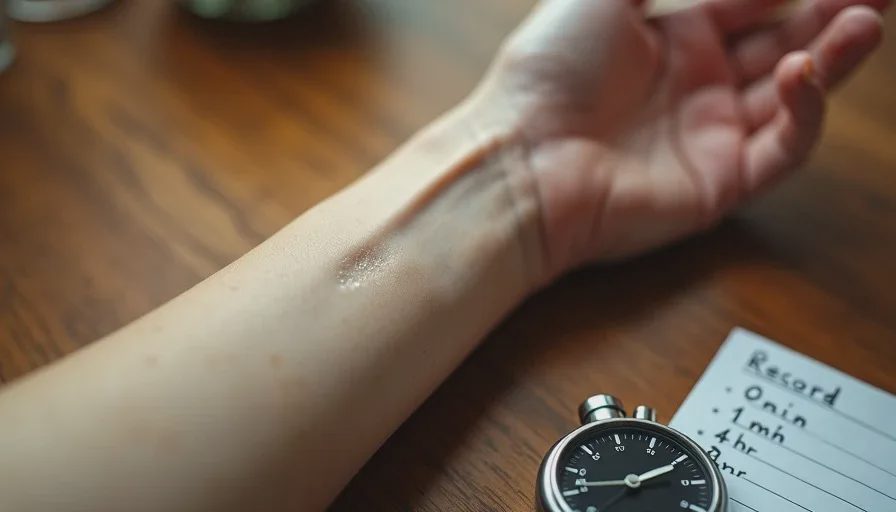
Here's what happens on my skin, hour by hour:
Time After Spraying | What I Smell | Intensity (1-5) |
|---|---|---|
0-5 min | Sharp, almost metallic violet leaf and cardamom | 4 |
5-30 min | The metallic edge softens; sandalwood emerges | 4 |
30 min - 2 hrs | Warm sandalwood with a dry, papery iris note | 3 |
2-5 hrs | Leather and wood dominate; a salty-skin quality appears | 3 |
5-8 hrs | Soft, close-to-skin sandalwood and musk | 2 |
8-12 hrs | Faint woody whisper on the wrist, detectable only up close | 1 |
The opening is the part people either love or hate. That violet-and-cardamom blast in the first five minutes is sharp — almost abrasive. I've watched people's faces change when they smell it cold. But give it twenty minutes and the sandalwood arrives, and that's when the scent starts earning its reputation.
The interesting shift happens around the two-hour mark. On my skin, a salty quality emerges that I can only describe as "warm skin after being outdoors." It's not the famous "sweaty" note some people report — I think that depends heavily on skin chemistry. On Nate's wrist, it smells drier and more leathery. On mine, it reads as salt and wood.
How It Behaves Across Four Seasons
Santal 33 changes dramatically depending on when you wear it — and that's the part most reviews skip entirely.
Seasonal Performance Log
I tracked Santal 33 across a full year, wearing it once every two weeks under roughly the same conditions (two sprays, one on each inner wrist, applied to clean moisturized skin):
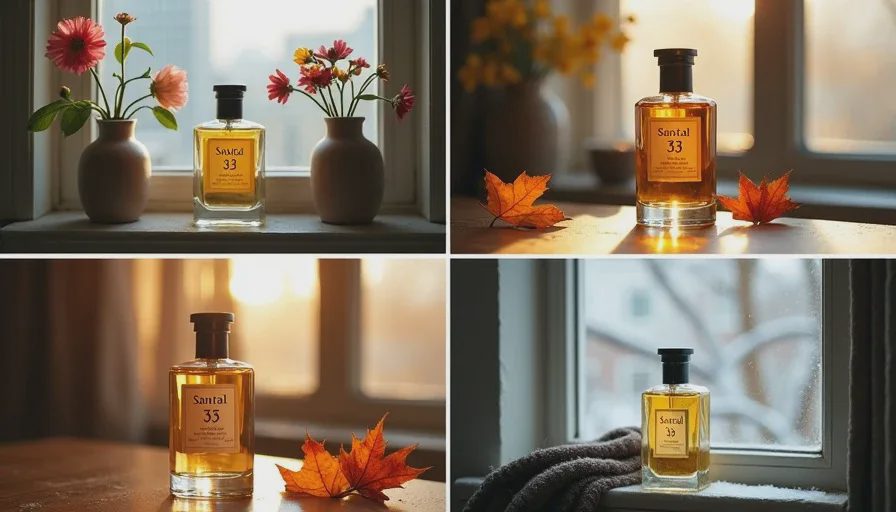
Summer (Chicago, 80-95°F, high humidity): Top notes burn off in under 10 minutes. The sandalwood arrives faster but feels thinner. Longevity drops to about 6 hours. The salty-skin note is amplified by humidity and can read as "too much" in a crowded room. I wore it to a July rooftop dinner and felt self-conscious by the second hour.
Fall (50-65°F, moderate humidity): The sweet spot. The opening lasts 15-20 minutes, the heart is full and rounded, and I get 8-9 hours of detectable scent. The leather note is more present. This is when Santal 33 feels like it was designed to be worn.
Winter (15-35°F, very low humidity): The opening is sharper and lasts longer — nearly 30 minutes. Everything feels more compressed, like the cold is holding the molecules in place. Longevity stretches to 10-12 hours, but the scent sits closer to the skin. I can smell it on my scarf the next day. The woody base is dominant.
Spring (45-65°F, variable humidity): Similar to fall but with more of the iris note showing through. The cardamom in the opening feels brighter. About 7-8 hours longevity.
Here's the summary:
Season | Longevity | Sillage (Projection) | Overall Character |
|---|---|---|---|
Summer | 6 hrs | Moderate-high | Salty, thin, can be too much |
Fall | 8-9 hrs | Moderate | Full, rounded, leather-forward |
Winter | 10-12 hrs | Low-moderate | Compressed, woody, intimate |
Spring | 7-8 hrs | Moderate | Bright, iris-forward, balanced |
Has It Changed Over Eight Years?
This is the question I find most interesting, and the answer is: the fragrance hasn't changed, but my relationship with it has.
Eight Years of Shifting Perception
When I first bought Santal 33 in 2018, I was intoxicated by it. I wore it three times a week. I got compliments constantly — from coworkers, from strangers at coffee shops, from Nate, who usually doesn't notice what I'm wearing but mentioned this one within the first week.
By year three, I was wearing it less. Not because I liked it less, but because it had become so popular that I smelled it everywhere — on other people in restaurants, on the L train, in hotel lobbies. There's a strange loneliness in wearing a scent that's become a uniform. I didn't stop wearing it, but I reached for it more selectively.
By year six, I started appreciating it differently. I stopped caring about its popularity and started paying attention to what it actually does on my skin — the way the leather emerges in the third hour, the way it sits on cotton versus wool, the way it smells the morning after. It became a personal scent again, not a cultural one.
This is what a real perfume longevity test looks like — not just how many hours it lasts on your wrist, but how it holds up across years of your life. Santal 33 has lasted because the dry-down is genuinely beautiful on my skin. Not on everyone's. On mine.
If you're considering it: sample it first. Wear it in fall or winter. Give it an hour before you judge. And don't worry about how many other people wear it — worry about whether it smells like you.
Tried it. Lived with it. Then I'll tell you if it's worth it.
After eight years, I'm still telling you: yes, on my skin, it is.
No comments yet — be the first to share a thought.