The perfume decant vs full bottle debate is something I learned the hard way. Eight years ago, I walked into a boutique and dropped 30 of a $300 bottle is often the smarter purchase.
What a Decant Actually Is
A decant is a small volume of fragrance transferred from a full bottle into a smaller container, usually a glass atomizer. That is it. No mystery, no special process. Someone buys a full bottle, pours or sprays a few milliliters into a smaller vial, and sells or trades it.
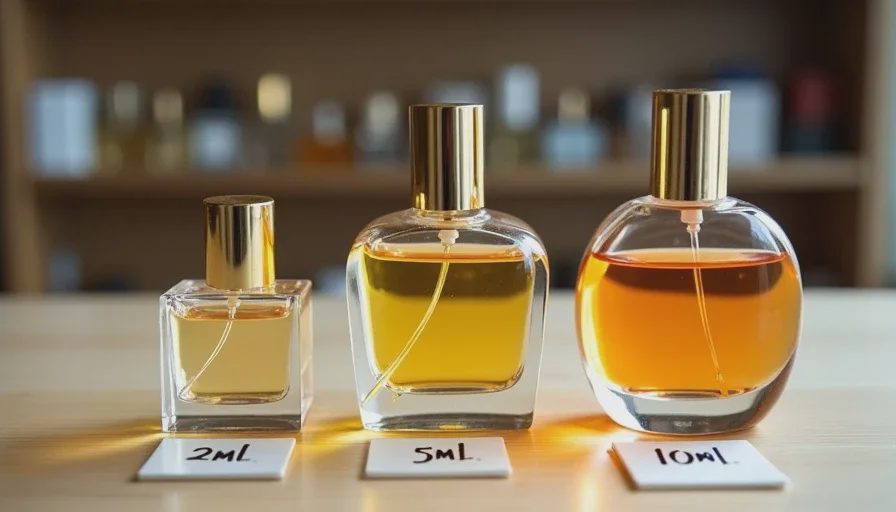
The Sizes You Will Encounter
Decants come in several standard sizes, and each serves a different purpose:
Size | Use Case | How Long It Lasts (Daily Wear) |
|---|---|---|
1-2 ml | Paper testing, one-wear trial | 3-5 sprays |
5 ml | One week of daily wear | 60-70 sprays |
10 ml | Two to three weeks of daily wear | 120-140 sprays |
The 5 ml size is the sweet spot for most people. It gives you enough juice to test a fragrance across multiple days, in different moods, in different weather, on both skin and paper. A 2 ml vial is enough for a first impression but not enough for a real evaluation.
Where to Get Them
There are three main channels, and I have used all three:
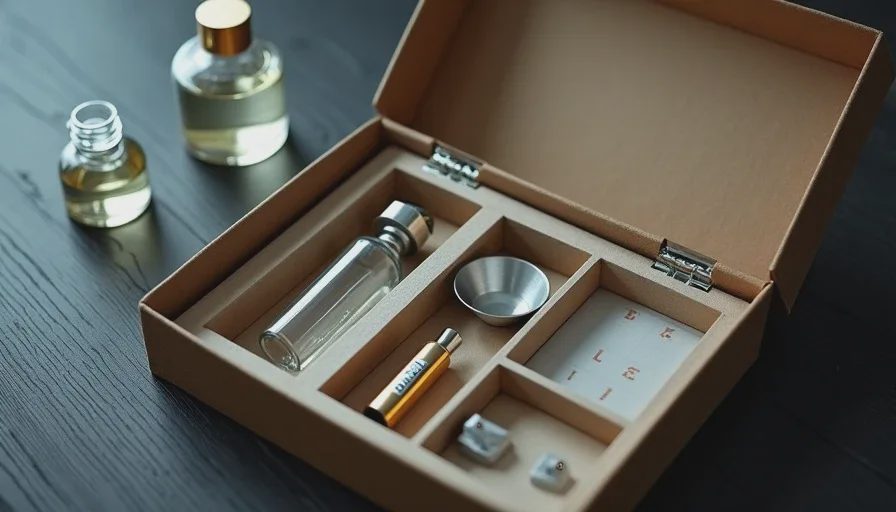
Dedicated decant sites — Online retailers that specialize in splitting full bottles into decants. Reliable, consistent sizing, but markup is higher.
Fragrance communities — Forums and groups where enthusiasts trade and sell from their own collections. Prices are often lower, but you need to trust the seller.
Sample subscription services — Monthly boxes that send curated samples. Good for discovery, less good if you are targeting a specific fragrance.
I have bought roughly 200 decants and samples over the years through these channels. Some were great. A few were mislabeled. The key is to start with reputable sellers and branch out once you know what you are doing.
The Math of Cost-per-Wear
Here is where the decant economy gets genuinely compelling. A full bottle is not always the better value, even when the cost-per-milliliter looks cheaper. What matters is cost-per-wear, and that number changes depending on how often you actually reach for a fragrance.
A Real Example
Let me walk you through a calculation I did last year. I was considering a niche fragrance that retails for 28.
Option | Upfront Cost | Total Sprays (approx.) | Cost per Wear (2 sprays/day) |
|---|---|---|---|
Full bottle (50 ml) | $295 | ~700 | $0.84 |
Decant (5 ml) | $28 | ~70 | $0.80 |
Decant (10 ml) | $50 | ~140 | $0.71 |
The full bottle is cheaper per milliliter. But here is the catch: I estimated I would wear this fragrance maybe 15 times a year. At that rate, the full bottle would take 46 years to empty. The decant, at 35 wears, would last over two years and cost me 295.
Now flip the scenario. If I knew I would wear a fragrance 150+ times a year — a signature scent, an everyday office fragrance — the full bottle wins clearly. The decant economy is not about always buying small. It is about matching the purchase size to your actual usage.
My Personal Decant Strategy
I keep a simple rule that has served me well:
First encounter: 2 ml sample, paper and one skin test
Promising: 5 ml decant, two weeks of wear across different conditions
Confirmed love: Full bottle purchase
Seasonal rotation: 10 ml decant, enough for a season without committing
Out of the last 20 fragrances I tested seriously, I bought full bottles of exactly 3. The other 17 lived as decants, some of which I reordered, most of which I did not. That is the decant economy working as intended. It kept me from owning 17 bottles I would have regretted.
Tried it. Lived with it. Then I'll tell you if it's worth it. — The decant economy is not a compromise or a consolation prize. For most fragrances, it is the rational starting point, and for some, it is the rational ending point too.
When the Full Bottle Makes Sense
I want to be fair to the bottle. Decants are not always the answer. There are situations where a full bottle is the right call from the start, and pretending otherwise would be dishonest.
A full bottle makes sense when you have already worn the fragrance extensively and know it is your daily driver. It makes sense when the fragrance is inexpensive enough that the decant markup exceeds the bottle price. And it makes sense when the bottle itself matters to you — some people love the ritual of owning the original flacon, and I will never judge that.
Nate, for what it is worth, owns exactly one bottle of cologne. He has worn it for six years. He never needed a decant because he never wavered. If you are that person, the decant economy is not for you, and that is fine. But if you are someone who is curious, who wants to explore, and who has been burned by blind buys — and I have been that person — then 300 bottle is not a compromise. It is the smarter buy.



No comments yet — be the first to share a thought.