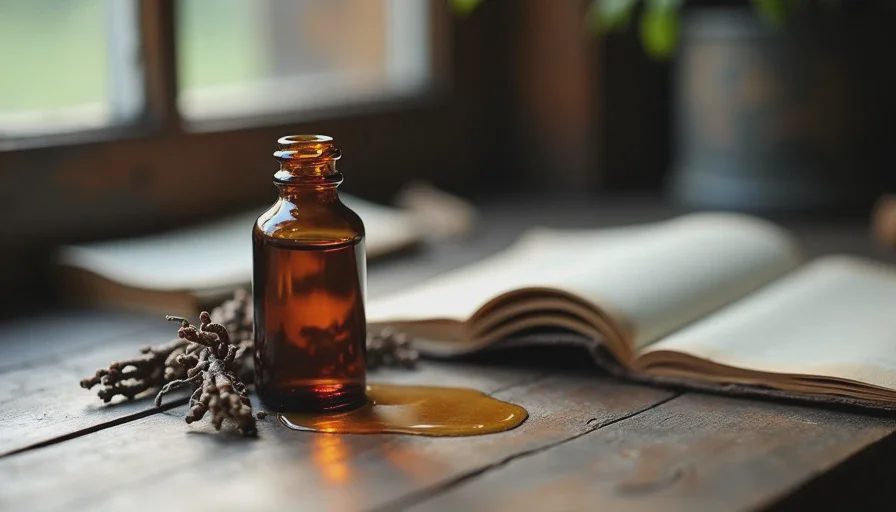
If you have ever wondered what does vetiver smell like, you are not alone. For years I would read fragrance descriptions that mentioned vetiver and nod along as if I knew exactly what they meant. I did not. I was pretending, and I suspect a lot of people are. It took me growing the herb (not vetiver itself, but rosemary and thyme, which are gateway plants) and testing dozens of vetiver-forward fragrances before I could actually pick it out of a blend. This is the explainer I wish I had read eight years ago, back when I was blind-buying bottles based on notes pyramids I only half understood.
What Vetiver Actually Smells Like
Vetiver smells like damp earth, dried grass, and a thin ribbon of smoke running through it. That is the short answer, but the short answer is misleading because vetiver shifts depending on how it is processed and what it sits next to in a formula.
The Raw Material
Vetiver comes from the roots of a tall grass native to South Asia. The roots are harvested, dried, and then distilled into an essential oil that ranges from amber to nearly black. The oil is thick, and if you smell it straight from the bottle, it hits you in layers:
First impression: Dark, wet soil, like pressing your nose into a garden bed after rain
After a few seconds: Smoked hay, dried grass, something vaguely leathery
Dry-down: A clean, almost soapy earthiness that lingers for hours
Nate, my partner, smelled raw vetiver oil on a strip once and said, "It smells like the basement of an old library." I thought that was oddly accurate. It has that cool, dry, slightly underground quality.
The Variations
Not all vetiver smells the same. The two most common types you will encounter:
Type | Origin | Scent Profile |
|---|---|---|
Bourbon Vetiver | Réunion Island | Smoother, greener, slightly floral |
Haitian Vetiver | Haiti | Earthier, darker, more smoky |
Most fragrances do not tell you which type they use, but the difference matters. Bourbon vetiver tends to feel more refined and wearable in warm weather. Haitian vetiver has a depth that works beautifully in cold-weather compositions. When a fragrance lists "vetiver" without specifying, it is usually a blend or whatever the house sources in volume.

Where You Will Find Vetiver in Fragrance
Vetiver shows up more often than you think. It is one of the most widely used base notes in perfumery, and once you can recognize it, you start smelling it everywhere.
Common Fragrance Families
Vetiver anchors several major fragrance families. Here is where it tends to appear and what it does in each:
Woody fragrances — Vetiver adds an earthy floor under cedar and sandalwood. It grounds the lighter woods and gives them staying power.
Citrus fragrances — A vetiver base under lemon or bergamot creates contrast. The citrus sparkles on top; the vetiver smolders underneath. This is one of my favorite combinations.
Aromatic fougeres — Think lavender, coumarin, and oakmoss with vetiver in the base. Classic men's fragrances lean heavily on this structure.
Oriental/smoky compositions — Vetiver pairs with incense, leather, or tobacco to create depth without sweetness.
Recognizing Vetiver in a Blend
If you want to train your nose, here is what I did. I bought a 2 ml decant of a fragrance that is essentially vetiver and nothing else — there are a few on the market — and I smelled it on paper every morning for a week. Then I tested it on skin. Then I went back to fragrances I already owned and looked for it.
The trick is to wait for the dry-down. Vetiver is a base note, which means it reveals itself in the last third of a fragrance's life. The top notes — citrus, herbs, whatever — will fade first. What remains, often for hours, is that dark, grassy, earthy hum. That is vetiver.
Tried it. Lived with it. Then I'll tell you if it's worth it. — Yes, even if you think you hate "earthy" scents. Vetiver is one of those materials that changes your mind once you encounter it in the right composition.

How to Start Exploring Vetiver
You do not need to buy a full bottle to understand this note. In fact, I strongly recommend you do not. Here is my suggested approach:
Get a decant of a vetiver-forward fragrance (5 ml is enough)
Test it on paper first, then on skin, at least three times
Try it in different temperatures — vetiver in January is a different animal than vetiver in July
Ask someone with an untrained nose to smell it and describe it back to you
That last step is something I do with Nate regularly. His descriptions are never technical, but they are always honest. If he says "dirt" or "campfire," I know the vetiver is doing its job. If he says "nothing," the fragrance is too subtle or the vetiver is buried under louder notes.
Vetiver is not a flashy note. It will not announce itself the way vanilla or rose will. But it is one of the most versatile and enduring materials in perfumery, and once you can identify it, you will have a tool that unlocks a huge number of fragrance descriptions. You will stop nodding along and start actually knowing.



No comments yet — be the first to share a thought.