Most people land on a fragrance review blog looking for practical answers — how long something lasts, whether it's worth the money, which decant to order before committing to a full bottle. I understand that completely, because it's exactly how I read them for years before starting my own. But every so often, I write a post that isn't that kind of review, and this is one of them. It's about a perfume I never wore, found in a thrift store on a gray Saturday, and the kitchen it brought back with it.
The Bottle That Stopped Me
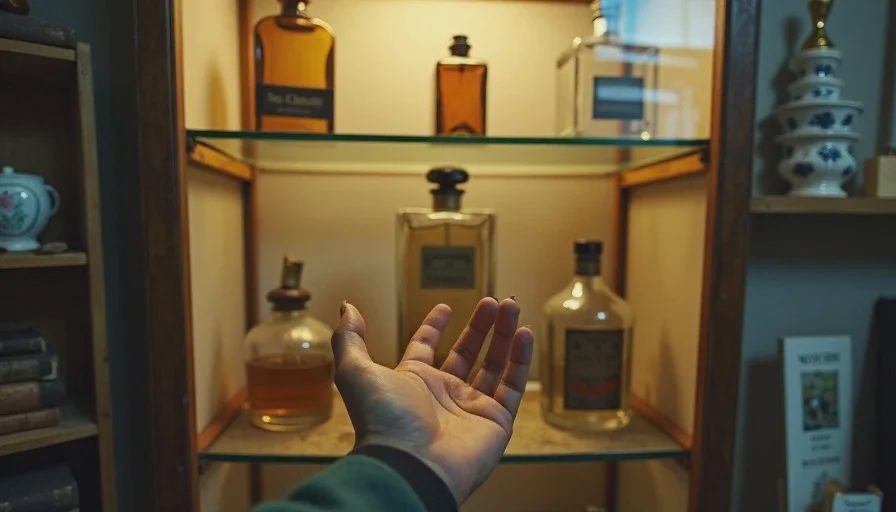
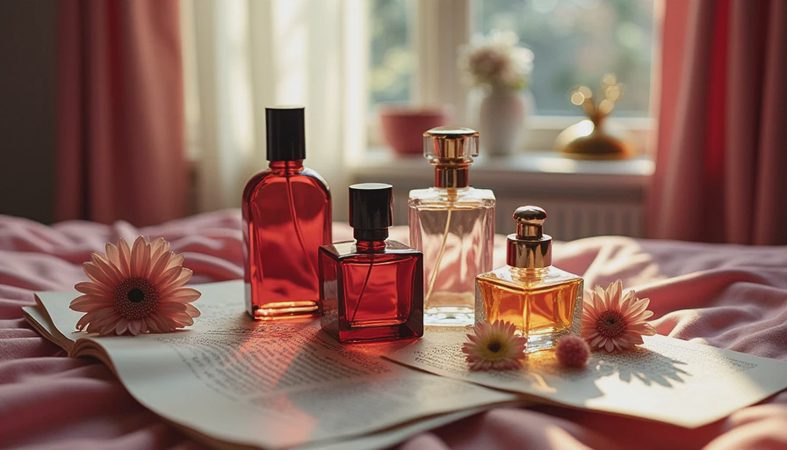
It was a damp November morning, the kind where Chicago turns the color of old pewter. Nate and I were killing time between the farmers market and lunch, and I wandered into a shop on Clark Street that sells used books, mismatched dishes, and — in a glass case near the register — a small collection of old perfumes. Most were the usual casualties: half-empty bottles of nineties mass-market scents, faded boxes, and one bottle I'd been curious about for years.
The Kitchen in the Bottle
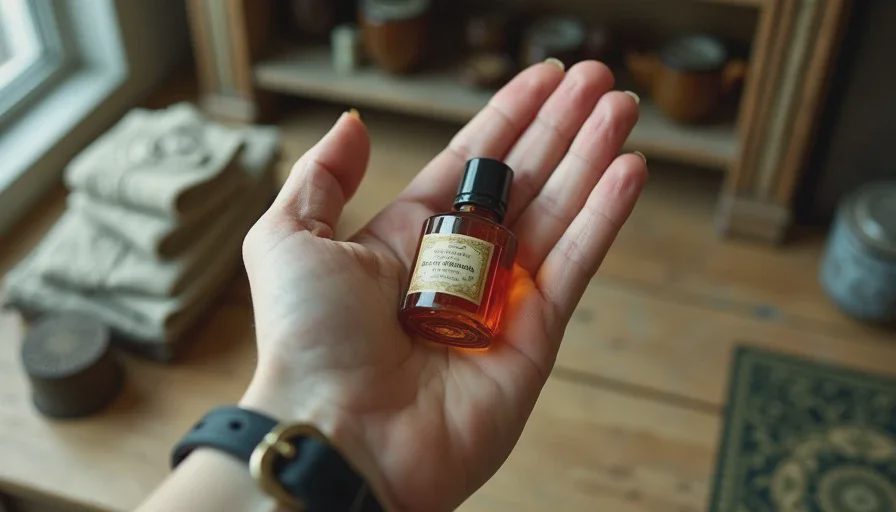
One of them stopped me cold. It was a squat little bottle, maybe a third full, with a label I didn't recognize. I took off the cap and smelled it — and for a second I was twelve years old, standing at my grandmother's counter in her green-and-yellow kitchen, watching her roll out pie dough.
Here's the strange part: I can't tell you what was in that bottle. Some rose, maybe, and a lot of oakmoss, and something powdery the way old cosmetics are powdery. The dry-down smelled like the inside of her linen drawer and the warm spot behind her kitchen radio. I stood there in a shop full of strangers, holding a bottle I would never identify, while my grandmother's kitchen closed around me like a room I'd forgotten I ever left.
What I Bought Instead
I didn't buy the bottle. It wasn't the price — it was eleven dollars. It was that the smell was so personal, so completely hers, that wearing it would have felt like borrowing her life. I bought a different one instead, a dusty thing with a jasmine note that made me think of my mother's garden, and I set the first one back on the shelf. I still think about it. Tried it. Lived with it. Then I'll tell you if it's worth it. And this one was worth everything, even though I never owned it.
Why Scent Owns Your Memories
There's a name for what happened in that shop, and it's not a magic one — researchers call it the Proust effect, after the writer who dunked a madeleine in tea and found himself flooded with childhood memories. The short version: smell is the only sense that runs straight through the parts of the brain that handle emotion and memory, without stopping at the relay station the other senses use. That's why a whiff of something can take you to a specific kitchen, a specific summer, a specific person, when a photograph or a song never quite gets there.
The Notes That Carry Us Back
Over the years, I've started noticing which materials trigger memory in people most often. I don't have a lab — I have a small shelf, a lot of decants, and a habit of asking people what things smell like to them. The pattern is real:
Smell | What People Say It Brings Back |
|---|---|
Vanilla and cinnamon | Grandparents' kitchens, baking afternoons, warm rooms in winter |
Lilac and iris | Childhood springs, backyards, grandmothers' dressing tables |
Musk and powder | Old coats, mothers' closets, being tucked in |
Tobacco and leather | Fathers' armchairs, garages, the front seat of an old car |
Soap and aldehydes | Clean linens, laundry days, being freshly bathed |
Every single one of these is a memory in a bottle. That's why a fragrance can feel so personal — and why the same perfume can mean nothing to one person and everything to another. It's also why the practical side of a fragrance review blog and the private side of scent keep crossing paths: the moment you know what a perfume smells like to you, you're not just rating a bottle anymore, you're deciding whether to wear someone's memory.
What This Means for Buying Perfume
When you're testing a new sample, the question is not only "does this smell good" but "what does this smell like to me?" A scent that smells like a beautiful abstract idea on paper can smell like someone else's history on your skin — or like your own. Neither is wrong. But knowing which one you're getting changes what you buy and what you actually reach for on a Tuesday morning.
Thrift Hunting as a Second-Hand Memory
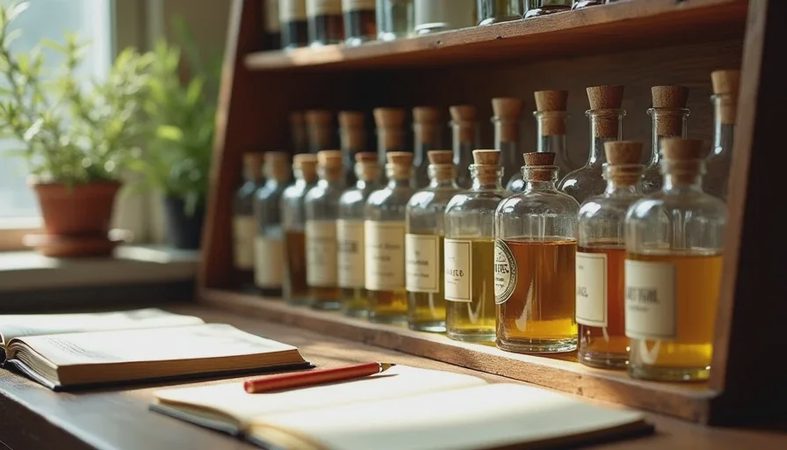
My study corner has a shelf of bottles I chose carefully, but the bottles I remember are often the ones I almost didn't bring home. There's a small collection of them now: a chypre from a shop in Wicker Park, a strange citrus thing from a church basement sale, the jasmine bottle that reminded me of my mother. Most of what I write on this fragrance review blog is practical — longevity, dry-downs, whether a bottle earns its shelf space — but this collection lives outside all of that. Weekend thrift runs are a kind of nose work for me — the same attention I give to testing notes, applied to the question of who wore this before me and what their life smelled like.
What I Look For in an Old Bottle
When I'm digging through a box of half-used perfume, here's what I check:
The state of the juice. If it's cloudy, smells sharp or vinegary, or has evaporated into a brown sludge, it's gone — no amount of nostalgia saves a turned fragrance.
The box and label. Even if I can't identify the brand, the era of the label tells me what materials to expect. Older formulas lean different than today's — more powdery, more chypre, more spice.
The first note that hits. I smell with my eyes closed, and I pay attention to the memory it triggers, not just whether it's pleasant.
The price. Most are under twenty dollars. If I'm wrong about one, I'm out the cost of lunch, and that's a fair trade for the ones that are right.
Old bottles aren't always wearable — some are simply past their prime. But they taught me something no new release ever has: that scent is where a life leaves its fingerprints. It's the reason this fragrance review blog exists at all — not to rank bottles, but to help you figure out which smells belong to your life. My grandmother's kitchen is gone now, the house sold years ago. But a squat eleven-dollar bottle in a shop on Clark Street brought it back for ninety seconds, and that was worth more than any perfume I've ever owned.


No comments yet — be the first to share a thought.