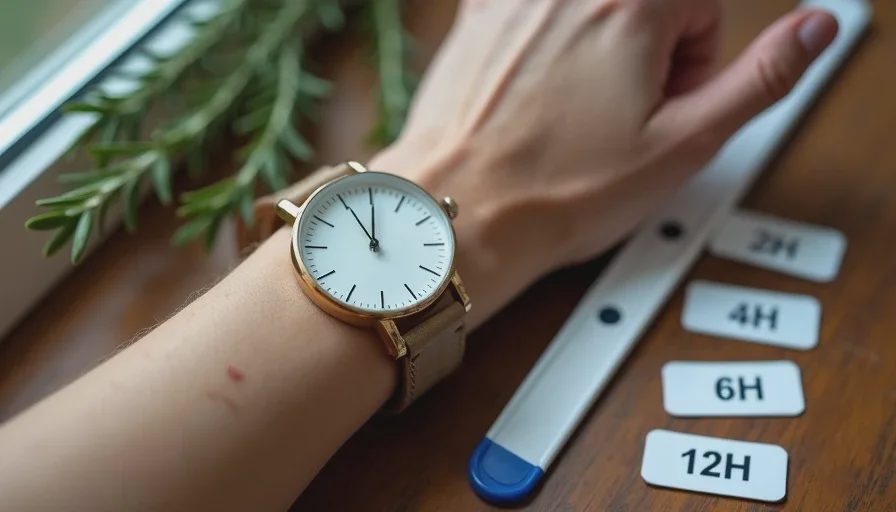
A proper perfume longevity test isn't about spraying something and sniffing your wrist an hour later. I've been running these for years — same arm, same amount, same day, checked at regular intervals from 8 AM to midnight. What I've learned is that the staying-power claims printed on bottles are almost meaningless. A fragrance that "lasts 12 hours" on one person can vanish in four on another. So I took ten fragrances from my collection and wore each one on my own skin, under real conditions, through a full Chicago day in October. Here's what actually survived to midnight.
The Method Behind the Test
The results matter less than the method, so let me explain how I set this up. I built this perfume longevity test the way I'd build any experiment I actually trust: one variable at a time. I picked ten fragrances across different families — citrus, woody, floral, gourmand, leather, oud, musk — and wore them one per day over two weeks. Each got the same treatment: two sprays on the inside of my left wrist, one behind my left ear. Nothing on my right arm — that was my control. Same shower gel, same unscented lotion, same apartment temperature.
How I Tracked Each Wear
Here's what I checked at each interval:
Hour 0 (8 AM): Initial impression, opening notes, how far the scent projected
Hour 2 (10 AM): Has the top note faded? What is the heart doing?
Hour 4 (12 PM): Lunch check — still present or fading?
Hour 6 (2 PM): The afternoon test, where most fragrances die
Hour 8 (4 PM): Can I still smell it without putting my wrist to my nose?
Hour 10 (6 PM): Evening wear — would someone beside me catch it?
Hour 12 (8 PM to midnight): The final check — skin scent, ghost, or nothing?
I wore each fragrance through a normal day: working from my study corner, cooking, walking along the lakefront, running errands. No special treatment, no reapplication. Nate got a sniff at hour 8 without me telling him which fragrance it was — his reaction went in the notes too.
Tried it. Lived with it. Then I'll tell you if it's worth it. — And in this case, "worth it" means "does this thing actually stay on your skin for a reasonable amount of time?"
What Survived and What Didn't
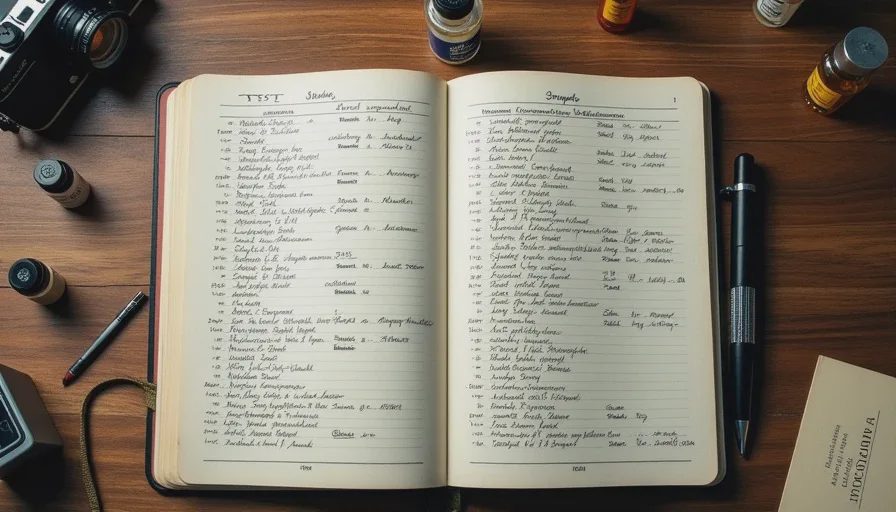
Here's the part you actually want: the ranked table. I'm scoring on a simple scale — Strong (clearly present, recognizable), Present (detectable but changed), Ghost (faint trace, barely there), and Gone (nothing). These results are my skin, my climate, my October. Yours will differ. But the patterns may help you predict your own results.
The 12-Hour Ranking
Rank | Fragrance Type | Hour 2 | Hour 4 | Hour 6 | Hour 8 | Hour 12 | Verdict |
|---|---|---|---|---|---|---|---|
1 | Oud-amber resin | Strong | Strong | Strong | Present | Present | The only clear survivor at midnight |
2 | Leather-spice | Strong | Strong | Present | Present | Ghost | Shifted beautifully over twelve hours |
3 | Patchouli-rose | Strong | Present | Present | Present | Ghost | The heart held strong all day |
4 | Vanilla-gourmand | Present | Present | Present | Ghost | Ghost | Sweet trail lingered near the skin |
5 | Musk skin scent | Present | Present | Ghost | Ghost | Ghost | Quiet but persistent |
6 | Woody-floral | Strong | Present | Ghost | Ghost | Gone | Lovely while it lasted |
7 | Green-herbal | Strong | Present | Ghost | Gone | Gone | Fresh notes fled fast |
8 | White floral | Strong | Ghost | Ghost | Gone | Gone | Loud start, fast fade |
9 | Aquatic-fresh | Present | Ghost | Gone | Gone | Gone | Gone by lunch |
10 | Citrus-cologne | Present | Gone | Gone | Gone | Gone | Lovely and fleeting |
A few things jumped out. The oud-amber was the only fragrance I could still clearly identify at midnight — and honestly, I could have gone longer. The leather-spice was the real surprise: it moved from smoky to warm to a soft skin trace across twelve hours. The citrus cologne was gorgeous and gone in three hours, which is exactly what I expect from that family.
The white floral was the biggest disappointment. It opened huge — projection across the room — and then collapsed into almost nothing by hour four. I've seen this pattern before with certain indolic florals on my skin. On Nate's skin, the same fragrance lasted two hours longer. Skin chemistry is real, and it's unpredictable.
What the Numbers Don't Tell You
Longevity isn't just about time. It's about how the fragrance changes while it lasts. The patchouli-rose ranked third in staying power, but what made it special was that it kept evolving — the rose faded and the patchouli got earthier and warmer, like the scent was having a conversation with my skin over six hours. The vanilla-gourmand stayed detectable but went flat after hour four, sitting in one sweet spot without moving. Technically it "lasted." Experientially, it got boring.
Here's what this perfume longevity test taught me, and what I now tell everyone who asks about staying power: a fragrance that lasts twelve hours but only smells good for two isn't a good value. A fragrance that lasts four hours but smells incredible the entire time might be worth every penny. The number on the clock matters less than the quality of the hours it occupies.
My practical takeaways from running this perfume longevity test across ten fragrances:
Heavy resin and base-note-dominant scents last longest on me — no surprise there
Citrus and aquatic fragrances need reapplication, and that's not a flaw, it's their nature
Projection and staying power are different things — a loud fragrance can die fast
Nate's skin holds musk and floral notes longer than mine does
Climate matters — the same fragrances behaved differently in July humidity
If a fragrance you love only lasts four hours, that's not a dealbreaker. Carry a decant. Reapply after lunch. I'd rather wear something I love for four hours than something I'm indifferent to for twelve. The longevity test helps you set expectations — it shouldn't be the only factor in what you buy.
No comments yet — be the first to share a thought.