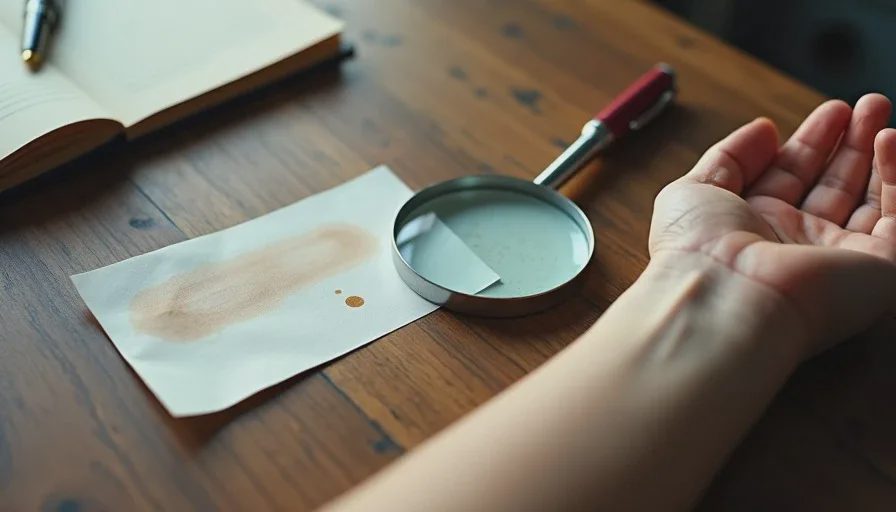
If you want to know how to test perfume before buying, the first thing you need to unlearn is the paper strip. I'm Claire, and I've spent eight years watching people — including my younger self — make decisions based on a strip of blotter paper that has almost nothing to do with how a fragrance will actually smell on human skin. The paper strip is a tool. It is not a verdict. And treating it like one is how you end up with a $120 bottle you never open.
The $120 Leather-Tobacco Disaster That Broke Me
Let me tell you about the bottle that finally made me stop trusting paper strips.
It was 2019. I was at a fragrance counter downtown, killing time before a dinner reservation. The sales associate handed me a strip sprayed with something dark and smoky — a leather-tobacco blend with notes of dried fruit and rum. On paper, it was intoxicating. Rich, complex, grown-up. I kept coming back to the strip over the next hour, sniffing it like it was a secret I'd just discovered. It smelled expensive in the way that makes you want to be the kind of person who wears expensive things.
I bought the bottle on the spot. $120. No hesitation.
I got home, showered, and sprayed it on my wrist before heading out to meet friends. Within twenty minutes, something had gone terribly wrong. That warm, smoky leather had turned sour — metallic and sharp, like coins left in a damp pocket. The tobacco that had smelled so sophisticated on paper now read as stale ash. By the time I met my friends, one of them asked, "Is something burning?" Not in a good way.
I wore it twice more, trying to talk myself into it. I told myself it was an acquired taste. I told myself I just needed to find the right occasion. But the truth was simpler and more painful: it smelled great on paper and terrible on me. That was it. That was the whole thing.
The bottle sat on my shelf for three years. Every time I opened my perfume cabinet, it was there — a $120 paperweight, a monument to my own impatience. I finally gave it to a friend who had admired it. On her skin, it smelled exactly the way I'd hoped it would on mine. Rich. Warm. Sophisticated. That was the moment I understood: the fragrance wasn't the problem. My testing method was.
Why Paper Strips Lie
Paper strips give you the top notes and nothing else — and they don't even give you those accurately.
The Chemistry Gap
Here's what's happening: when you spray fragrance onto paper, the alcohol evaporates almost instantly and the top notes — the lightest, most volatile molecules — bloom brightly and then fade. The paper absorbs the heavier molecules, but slowly, and without the warmth of skin to activate them. You're getting a flattened, one-dimensional version of the scent.
When you spray the same fragrance onto skin, everything changes. Your skin is warm — usually around 90°F on the wrist. That heat accelerates evaporation of top notes but also activates the heart and base notes, drawing them out in sequence. Your skin also has its own chemistry: oils, pH, bacteria (the good kind), residual soap, lotion, hormones, diet. All of these interact with fragrance molecules and alter how they smell.
Remember, a paper strip only captures the static skeleton of a fragrance (if you need a refresher on how notes are built, check out this guide on understanding top, heart, and base notes. But a good skeleton doesn't mean it translates well. To see why things fall apart on living skin, we need to look closer at how skin chemistry changes a perfume's DNA.
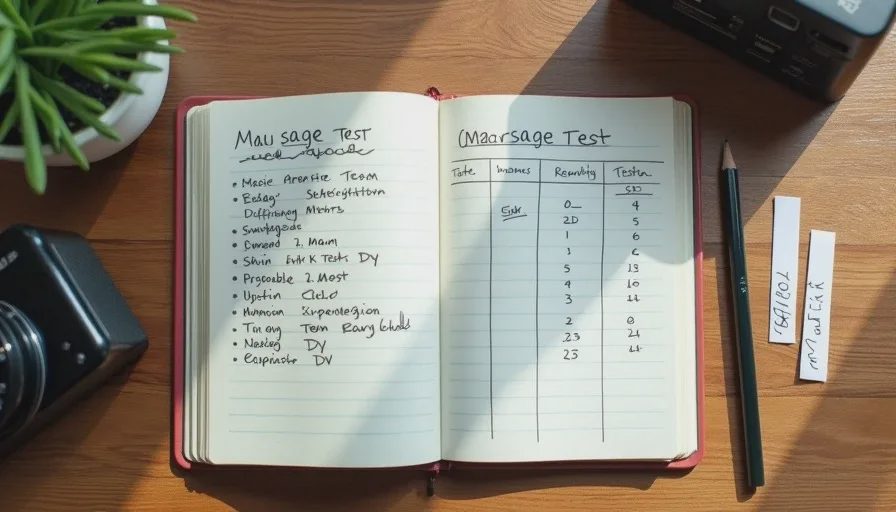
Here's a real example from my testing notebook — the exact three fragrances I tested side by side after learning this lesson:
Fragrance | On Paper Strip | On My Skin (Wrist) | On Nate's Skin (Wrist) |
|---|---|---|---|
Scent A (floral woody) | Bright, fresh, floral | Soapy and flat within 20 min | Rich, woody, lasted 8 hrs |
Scent B (citrus aromatic) | Sharp, clean, energetic | Turned vaguely metallic | Sweet and warm, completely different |
Scent C (amber oriental) | Heavy, sweet, syrupy | Barely detectable in 1 hour | Deep, resinous, gorgeous for 10 hrs |
Three scents, three different outcomes on three different surfaces. The paper strip told me almost nothing useful — and in two of three cases, it was actively misleading.
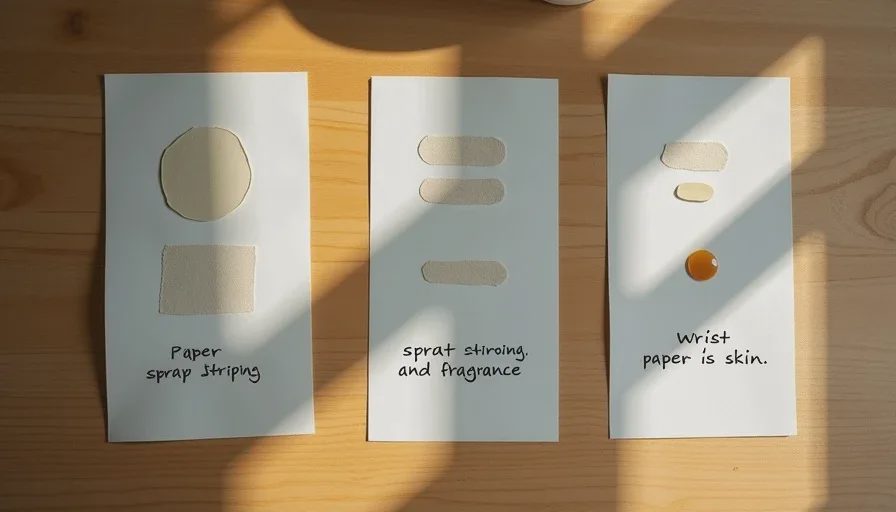
My Skin-Versus-Paper Method — A Five-Step Action Guide
I've built a testing method over eight years that accounts for the gap between paper and skin. It's not complicated, but it requires patience. And if you follow it exactly, you will never buy another $120 paperweight.
Step 1: Paper Strip First — Identification Only (0–5 minutes)
Spray one strip. Smell it once. Write down what you notice. You are not deciding anything. You are just cataloging: "citrus opening, something floral, maybe wood in the base."
Set the strip aside. Do not keep smelling it. The strip will continue to evolve, but that evolution is not the same as what will happen on your skin. Its only job right now is to give you a quick vocabulary list.
What to write down: The notes you can identify. The intensity. A first impression word or two. That's it.
Step 2: Skin Test — Same Session, Same Spray (0 minutes)
One spray on the inner wrist. Not two. Not three. One. Hold the bottle about six inches away, spray once, and let it air dry. Do not rub your wrists together — rubbing crushes the top notes and accelerates evaporation unnaturally. It also grinds the fragrance into your skin instead of letting it sit on the surface where it can develop properly.
What to write down: The time. The date. What you smell immediately — if it matches the strip, if it's already different. Note it.
Step 3: The 15-Minute Check — Strip vs. Skin Side by Side
This is where the gap becomes obvious. Pick up the paper strip and smell it. Then smell your wrist. They will probably be different. Sometimes subtly, sometimes dramatically.
If the strip smells bright and floral but your wrist smells soapy, that's your skin chemistry talking. Pay attention. If the strip smells sweet and warm but your wrist is already turning metallic, that's a red flag. Write down exactly what you notice. This fifteen-minute mark is the most telling moment in the entire process — it's when the top notes have settled and you can see whether your skin is going to be a friend or a foe to this particular formula.
What to write down: The strip at 15 minutes vs. your skin at 15 minutes. Note every difference. This is your data.
Step 4: Track the Dry-Down — 1 Hour, 4 Hours, and Next Morning
Now you wait. The heart notes show up around the one-hour mark — this is the scent's real personality, what it actually is beyond the opening sparkle. The base notes are what you smell when you wake up the next morning (or at least after eight hours). This is what you'll carry all day, what people will smell when they hug you at 6 PM.
At 1 hour: Smell your wrist. What's the heart? Is it better than the top? Worse? Completely different? Write it down.
At 4 hours: Smell your wrist. What's the base settling into? Is it something you want to smell like for the rest of the day? Write it down.
Next morning: Before you shower, smell the spot on your wrist and any residual scent on your clothes. This is the true base — the heavy molecules that survived everything. Write it down.
What to write down for each checkpoint: The time. The scent impression. Whether you still like it. Whether anyone else has commented on it.
Step 5: The Nate Test — Untrained Nose as Control Group
Nate is my control group. He doesn't know what top notes are. He doesn't care about houses or concentrations. He has no brand bias, no "this is supposed to be good" influence. He just tells me if something smells good or weird or like "a hotel lobby." (That last one is not a compliment.)
His input has saved me from more bad purchases than any expert advice ever has. Because here's the thing: if an untrained, honest nose doesn't like it, that's data. If they lean in and say "that's really nice," that's data too. A fragrance isn't just for you — it occupies space around other people. Test it with a real human in the room.
How to run the Nate Test: Don't tell him what it is. Don't tell him the notes or the brand. Just hold out your wrist and ask, "What do you think?" Write down his exact words. No translation.
The Full Testing Timeline (Print This and Use It)
Checkpoint | Action | What I'm Looking For | What to Write Down |
|---|---|---|---|
0–5 min (strip) | Spray strip, smell once, set aside | Initial impression, identification | Notes you can identify, intensity, first word |
0 min (skin) | One spray on inner wrist, air dry | Immediate reaction | Time, date, what you smell right away |
15 min (skin + strip) | Smell both, compare | Strip vs. skin gap | Every difference you notice |
1 hour (skin) | Smell wrist | Heart notes emerging | The scent's real personality — do you like it? |
4 hours (skin) | Smell wrist | Base notes settling | What you'll smell like all day — still good? |
Next morning (skin + clothes) | Smell wrist and clothes | Residual scent / true base | Longevity and the final impression |
Any time (Nate) | Ask Nate for blind opinion | Untrained first impression | His exact words |
What Skin Chemistry Actually Does
Skin chemistry isn't a myth or a marketing term — it's a measurable, observable thing that changes how fragrance smells on you versus anyone else. And because I've written about this in depth elsewhere, I'll keep it brief here, but if you want the full breakdown of why skin chemistry changes everything, that post covers pH, temperature, sebum, and hormones in detail.
The Variables That Matter (Quick Recap)
pH level: More acidic skin amplifies citrus and green notes; more alkaline skin can sweeten everything.
Oil production: Oilier skin holds fragrance longer and brings out base notes more prominently.
Diet: Spicy food can make fragrances read warmer and more intense; coffee can sharpen some notes.
Temperature: Warmer skin projects more but burns through top notes faster.
Hormones: Hormonal shifts change skin chemistry month to month — a fragrance that works in week one can read flat by week three.
The reason this matters for how to test perfume before buying is simple: a paper strip has none of these variables. It's a neutral, dry, room-temperature surface. Your skin is none of those things. When you make a purchase decision based on a strip, you're testing the fragrance in a context that doesn't exist in real life.
Tried it. Lived with it. Then I'll tell you if it's worth it.
Paper strips are a starting point. They are never the ending point. Trust your skin.


No comments yet — be the first to share a thought.