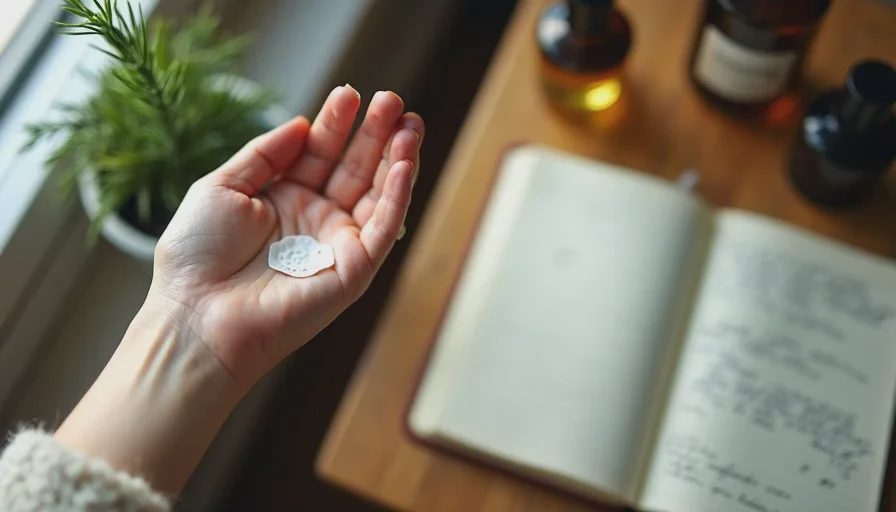
If you have ever sprayed a fragrance on a paper strip at a store, loved it, bought it, and then gotten home only to wonder if you grabbed the wrong bottle — you have already met skin chemistry and perfume. The scent that smelled bright and citrusy at the counter suddenly turns sour, flat, or just plain odd on your wrist. I have been there more times than I care to count. Eight years of testing, roughly forty full bottles and two hundred-plus decants cycled through, and I can tell you this: it is not magic, it is not a bad batch, and it is not something wrong with your skin. It is chemistry — the plain, measurable, explainable kind.
The Chicago Summer vs. January Test That Broke My Brain
Let me paint you a picture of the exact moment I stopped believing in perfume mysteries.
It was July in Chicago. If you've never been here in summer, imagine walking through a bowl of warm soup. The humidity hangs so thick in the air that you can practically see it. I was testing a bright, bergamot-heavy scent — the kind of fragrance that's supposed to be crisp and sparkling, like a gin and tonic on a terrace. I sprayed it on my wrist at 9:00 AM. By 3:00 PM, it was still going. Six hours. I was thrilled. I wrote in my notebook: "Great longevity, fresh all day, definitely buying this."
Then January rolled around.
Chicago winters are the opposite of July — dry, bitter cold, and the radiator in our apartment runs nonstop, turning the air into something closer to a desert than a living room. I pulled out the exact same bottle. Same wrist. Same spray distance. Same everything. At 9:00 AM, I sprayed it. At 10:30 AM, it was gone. Ninety minutes. Vanished like I'd never applied it.
I stared at my wrist in disbelief. Same fragrance. Same person. Same apartment. But July skin and January skin are not the same skin at all. In summer, the humidity alone was holding those top notes in place, slowing their evaporation, giving the fragrance a longer life. In winter, my skin was parched from the dry radiator heat — it sucked the moisture out of the formula and the alcohol evaporated so fast that the scent barely had time to develop.
That was the day I stopped believing in "one true test." If I had bought that bottle based on the July test alone, I would have been furious by January, convinced the perfume was a scam. If I had tested it only in January, I would have crossed it off my list and missed a fragrance I genuinely loved. Skin chemistry and perfume always have to be read together — across seasons, across conditions — or you are reading a book with pages missing.
Your Skin Is a Living Surface, Not a Blank Canvas
The short answer is this: your skin is not neutral. It is an active surface with its own pH, temperature, oil production, and its own community of bacteria — and every one of those things changes how a fragrance unfolds hour by hour. When I first started collecting, I treated paper strips as the "true" reading and my skin as the variable that messed everything up. It is actually the reverse. Paper gives you a fragrance in its rawest, most controlled form — useful for understanding structure, but not for predicting how it will smell on a human being on a Tuesday. That gap between bottle and body is the entire game of skin chemistry and perfume, and once you see it as a set of variables instead of a coin toss, testing stops feeling like a gamble.
The Five Factors That Change Everything
These are the five things I track every time I test something new. Once you know them, the "mystery" of skin chemistry and perfume shrinks down to a handful of understandable variables.
I've written this table in the plainest language I can manage — because if you're new to this, you shouldn't need a chemistry degree to figure out why your perfume smells different on you than on your friend.
Factor | What It Does | What It Means for You |
|---|---|---|
pH Level (how acidic or alkaline your skin is) | Acidic skin (lower pH) amplifies citrus and bright florals — they'll smell sharper and more vivid. More alkaline skin (higher pH) can flatten them, making them feel muted or dull. | If you notice that citrus-heavy perfumes always smell bright on you, your skin likely runs acidic. If they disappear quickly or smell "off," your skin may be more alkaline. You can't change this, but you can predict it. |
Body Temperature | Heat speeds up the evaporation of top notes and pushes base notes forward faster. Cooler skin slows everything down. | If you run warm (naturally or because you just exercised), the top notes will burn off quickly, and you'll hit the heart and base sooner. If you run cool, the whole fragrance unfolds more slowly — more time to enjoy the top, but you might wait longer for the base to show up. |
Sebum / Oil Production | Oilier skin holds fragrance molecules longer and intensifies heavier notes like woods, resins, and amber. Dryer skin lets the scent evaporate faster. | If you lean oily, you will get more longevity overall, but the scent may sit darker and heavier than intended. If you lean dry, you'll get less staying power — but a layer of unscented moisturizer before spraying can add hours of wear. |
Hydration Level | Well-hydrated skin holds scent molecules better than dry skin. Moisture gives the alcohol something to cling to and slows evaporation. | This one is the easiest to control. Drink water. Use unscented lotion. I tested this myself: the same fragrance on moisturized skin lasted three hours longer than on dry skin. Every single time. |
Diet and Hormones | Spicy food, medication, hormonal shifts (menstrual cycle, pregnancy, stress) all nudge skin chemistry in real, measurable ways. | A fragrance you love in week one of your cycle can smell completely different in week three. It's not the perfume — it's your body changing how it processes and projects the formula. I keep track of this in my testing notebook, and it's saved me from blaming bottles for something that was just my hormones talking. |
I learned the hydration one the hard way — the July vs. January test taught me that permanently. Same bottle. Same wrist. Different conditions. That was the moment I stopped believing in "one true test." Every perfume review that tells you a fragrance lasts eight hours without mentioning the wearer's chemistry is skipping half the story — skin chemistry and perfume always have to be read together, or you are reading a book with pages missing.
Tried it. Lived with it. Then I'll tell you if it's worth it.
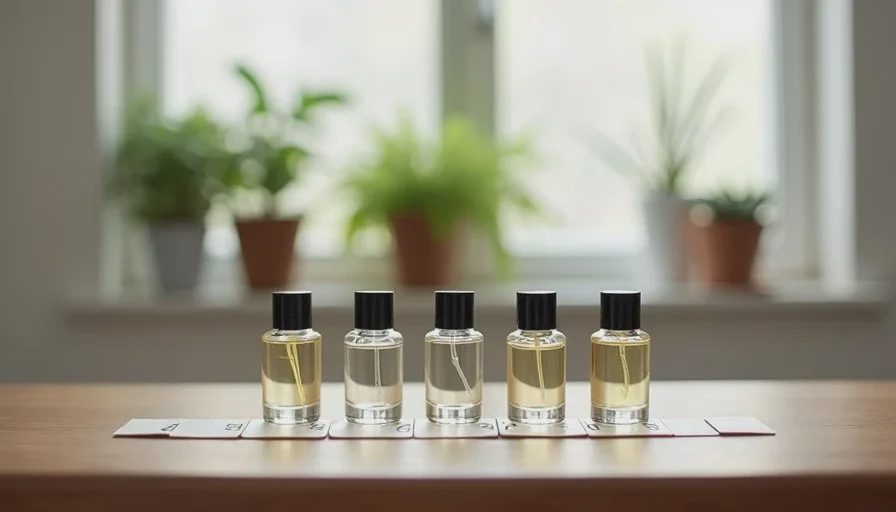
Paper vs. Skin: What Each One Actually Tells You
Neither test is wrong — they just answer different questions. I use both every single time I bring home a sample, and the gap between them is where the useful information actually lives. A paper strip shows you the fragrance's skeleton: the top/heart/base structure, the quality of the materials, whether the blend is smooth or disjointed. Skin shows you the flesh — how the same formula behaves on a living body in real conditions. This is also the first place a beginner usually gets confused, because most beginner's guide to fragrance advice assumes the strip and the skin will agree. They rarely do, and that disagreement is exactly what we are here to talk about.
My Testing Method, In Plain Terms
When a new decant arrives at my door, this is the routine:
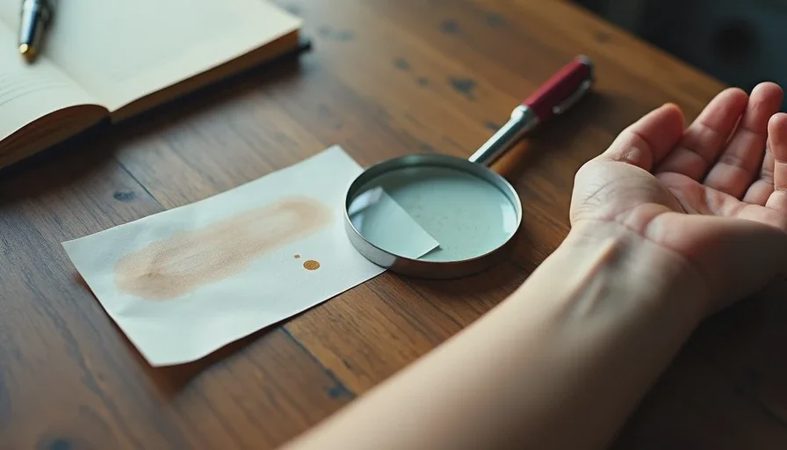
Paper strip first. I spray one strip, let it dry for thirty seconds, and take a first reading. Then I come back at fifteen minutes, one hour, and four hours. This tells me what the perfumer intended to build.
Skin test on the inner forearm. Same distance, same number of sprays. I write down the time and track it at the same intervals, plus eight hours and an overnight check.
The Nate test. My partner Nate smells my wrist without knowing what is on it. His untrained nose catches things I have learned to explain away — he will say "that smells like the inside of a medicine cabinet" or "that is nice, it smells like clean laundry," and both of those reactions are data.
Seasonal re-test. I never trust a single wearing. A fragrance that shines in October can fall flat in July, and I keep a small notebook with dates, weather, and impressions so I can see the pattern. The Chicago summer vs. January rule applies to everything I own.
Test Type | What You Learn | What It Misses |
|---|---|---|
Paper Strip | True structure, note separation, material quality | Real-world wear, projection, personal fit |
Inner Forearm | Realistic development, longevity, how it sits close to skin | Other pulse points — neck and chest behave differently |
Nate Test | First impression, accessibility, whether it reads "weird" to a normal person | No vocabulary for specific notes |
Seasonal Re-test | How temperature and humidity change the formula | Patience — this one takes months, not days |
The gap between paper and skin is where skin chemistry and perfume shows up most clearly. If a fragrance smells nearly identical on both, your skin is fairly neutral toward that formula. If they diverge hard — the orange fades in an hour and all you get is smoke by lunch — that is your skin chemistry at work, and now you can predict it instead of being surprised by it.

So, stop blaming your body chemistry like it's a mysterious curse. Once you understand the structure of top, heart, and base notes and realize why paper test strips often deceive you, everything clicks. That is why making the $8 sample habit your golden rule before buying a full bottle is the ultimate way to protect your wallet.
What You Can Control (and What You Cannot)
You cannot change your skin's baseline pH or its natural oil production, and you should not want to. But you can certainly work with what you have. I keep a plain, unscented moisturizer on my testing shelf — a thin layer applied about ten minutes before spraying extends wear time on almost everything I own. I also skip testing on days when I have eaten heavily spiced food or started a new medication, because both shift my chemistry enough to skew the result.
Here is the takeaway I want you to walk away with: when someone says "it smells different on everyone," they are describing five measurable factors meeting a specific formula — not a mystery. Skin chemistry and perfume is a relationship you can learn, not a lottery you lose. Figure out whether your skin runs acidic or alkaline, oily or dry, warm or cool, and you can predict which fragrance families will work for you before you spend a dollar on a full bottle. That is not magic. That is just paying attention.
Tried it. Lived with it. Then I'll tell you if it's worth it.



No comments yet — be the first to share a thought.