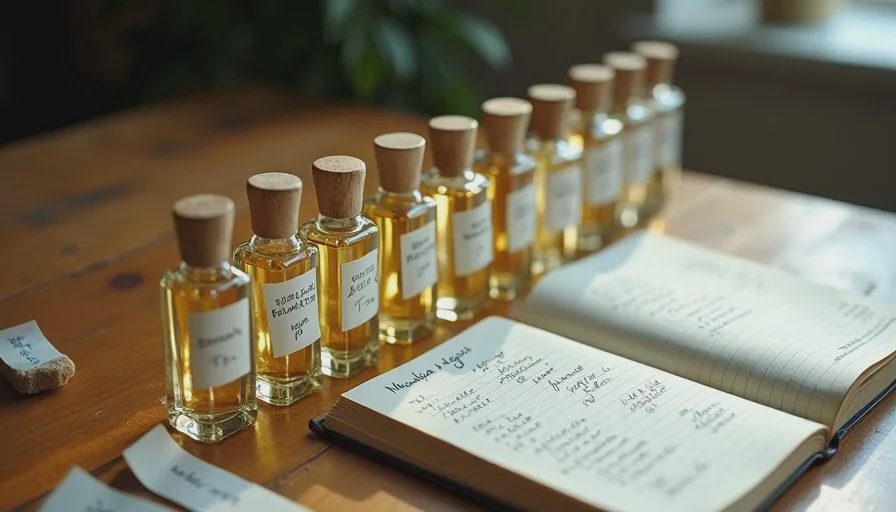
If you're wondering whether a perfume sample subscription is worth it, I can tell you this: an $8 sample once saved me from a $240 mistake, and I've never looked back.
I'm Claire. I've been testing fragrances for eight years, and I have a shelf of about 40 bottles — plus a shameful graveyard of blind-buy regrets that still makes me wince every time I open that cabinet. The habit that changed everything was simple: sample first, always. No exceptions.
The Tuition I Paid to Learn This Lesson
Let me take you back to 2018, my first year in this hobby. I was a walking wallet for marketing copy. I'd read a poetic description — "smoky vetiver with a whisper of leather and a sun-drenched Mediterranean fig" — and I'd click "Add to Cart" like I was under a spell.
Here's a partial list of the disasters that taught me the hard way:
Maison Francis Kurkdjian Grand Soir — $210. Everyone raved about it. On me? Straight-up baby powder left in a hot car. I tried to talk myself into liking it for three weeks. It sits in my drawer, untouched, a $210 paperweight that reminds me of my own hubris.
Le Labo Patchouli 24 — $185. I love smoke. I love birch tar. I thought this would be my signature. Instead, it turned into burnt BBQ ribs on my skin within twenty minutes. My partner Nate walked in and asked if something was burning in the kitchen.
Diptyque Tam Dao EDP — $140. I'd sampled it on paper at a store and thought it was gorgeous. On paper. On my skin? It turned hollow and sharp, completely missing the creamy sandalwood I fell for in the store. That was the one that finally made me furious — because I had tested it, but I'd tested it wrong.
Byredo Bal d'Afrique — $190. Bright, cheerful, sophisticated on everyone else. On me, it lasted twenty minutes and then disappeared like it was never there. I kept reapplying throughout the day, trying to force it to perform. It didn't.
Add in a few more $80–$120 impulsive buys, and I'd dropped nearly a thousand dollars that first year on bottles I couldn't stand to wear. I'd open my perfume cabinet and feel actual shame — not just at the wasted money, but at the sheer arrogance of thinking I could outsmart my own skin chemistry with a credit card.
That's when I got honest with myself: I wasn't buying perfumes. I was buying stories about who I could become. And the bill was getting ugly.
The Math Is Brutal
Blind buying fragrances is one of the most expensive habits you can develop, and the math gets brutal fast.
What Blind Buying Actually Costs
I tracked my first year of fragrance spending. Here's what it looked like:
Purchase | Type | Cost | Wore It More Than 3 Times? |
|---|---|---|---|
Bottle 1 | Blind buy | $95 | No — collected dust after week one |
Bottle 2 | Blind buy | $120 | No — gifted it to a friend who actually liked it |
Bottle 3 | Blind buy | $85 | No — sat in drawer for two years before I donated it |
Bottle 4 | Blind buy | $110 | No — I kept forcing it, kept hating it |
Bottle 5 | Blind buy | $75 | No — this one hurt because I'd wanted it for months |
Sample set | 5 x 2ml | $40 | Yes — led to 2 bottle purchases I still wear weekly |
Total blind buys | 5 bottles | $485 | 0 wins |
Total samples | 10 vials | $40 | 2 wins |
Let that sink in. $485 bought me nothing I wanted to wear. Five bottles, zero successes. Meanwhile, $40 in samples led me to two full bottles that have been in heavy rotation for years — and I knew they'd work before I bought them because I'd worn each sample five or six times across different weather, different moods, different days.
That's not a close call — that's a different sport entirely.
The $8 I'm talking about is the cost of a single 2ml decant from most sample services. Two milliliters is roughly 30–40 sprays. That's enough to wear a fragrance five or six times — in different moods, different weather, different contexts — before you commit to anything. It's the cheapest insurance policy in the fragrance world.
Why $8 Beats $200 Every Time
Why do I insist that an $8 sample is safer than a blind buy? Because counter impressions can be deeply misleading. As I discussed in the truth about paper test strips, cardboard and living skin are entirely different worlds. Combined with your unique skin chemistry and pH levels, relying on a quick sniff at the store is a recipe for a costly mistake.
The fragrance that dazzles you on a blotter card at 2 PM on a Tuesday might turn into something unrecognizable by 6 PM on your own wrist. The top notes you fell for? They're gone in fifteen minutes. What's left — the heart, the base, the actual scent you'll wear all day — is a complete unknown until you've lived with it. An $8 sample gives you the full picture. A $200 blind buy gives you a gamble.
And here's the thing that doesn't get talked about enough: paper strips lie. What you smell at the counter is a first date. What you smell after wearing it for six hours, through a workday, a workout, or a dinner? That's a marriage trial. And you don't marry someone after a ten-minute coffee.
How to Actually Sample
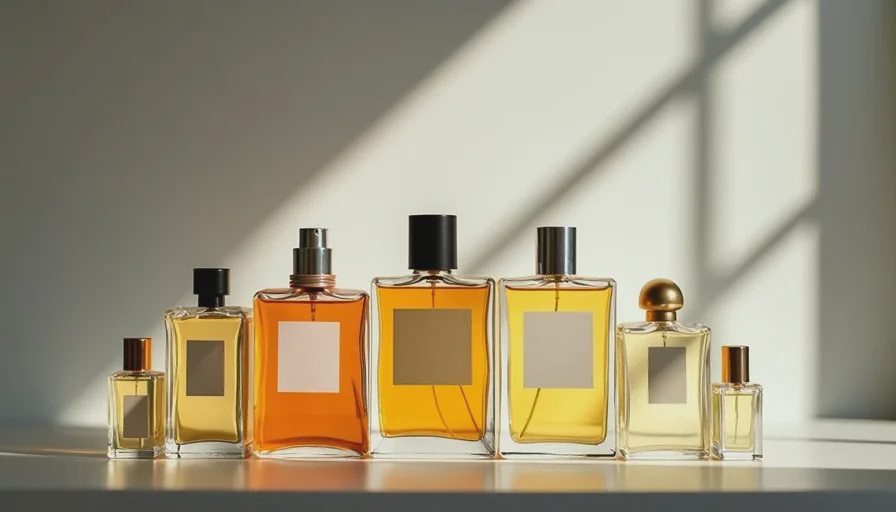
Sampling isn't complicated, but there's a right way to do it — and it's not spraying everything at once at a department store counter.
Where to Get Samples
There are three routes I use regularly:
Decant sites — independent sellers who break down full bottles into 2–5ml glass vials. Prices range from $5 to $20 depending on the fragrance. This is where I get most of my niche samples. The key is finding reputable sellers (check reviews, ask in fragrance communities).
Brand sample sets — many houses sell discovery sets of 3–5 scents for $20–50, often with a credit toward a full bottle. Good when you're exploring one brand's range, and the bottle credit can make them surprisingly cost-effective.
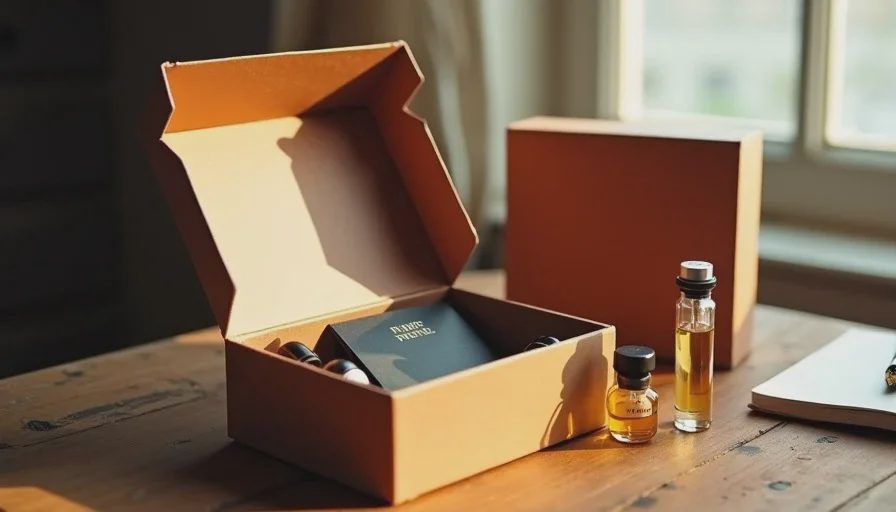
Subscription services — monthly deliveries of 1–3 samples for $15–25/month. This is the route people ask me about most: is a perfume sample subscription worth it?
Here's my honest take on subscriptions:
Route | Cost/Month | Pros | Cons |
|---|---|---|---|
Decant site | $10–30 (as needed) | You choose every scent | Requires research and some upfront knowledge |
Brand discovery set | $20–50 (one-time) | Curated, includes bottle credit | Limited to one brand's DNA |
Subscription | $15–25/month | Surprise factor, low effort, fun unboxing | You don't always choose; some months are total duds |
A subscription makes sense if you're new and genuinely don't know what you like yet. The surprise factor exposes you to scents you wouldn't have picked yourself — and sometimes that's how you find something unexpected. I used one for about six months, found three scents I loved, and then switched to targeted decant purchases because I'd developed enough taste to know what I was looking for.
But if you already know you like woody scents or florals or freshies, skip the subscription and buy decants with intention. You'll save money and waste less.
The Rules I Live By Now
After eight years and a lot of wasted money, I have three rules that I don't break.
My Three Sample Rules
Never buy a full bottle without wearing the sample at least three times.
Once is a first impression — exciting, but unreliable. Twice is a maybe — you're starting to know it. Three times — in different settings, different weather, different moods — is a real decision. I've had scents I adored on first spray become cloying by wear three. I've had scents that confused me on day one become my signature by day four. You can't rush this.Test in the season you'd actually wear it.
A heavy amber-vanilla sampled in July will tell you nothing useful except that it's heavy. It might be breathtaking in November. Sample it when you'd actually reach for it. If you're impatient, wait. The perfume will still be there.Get a second nose.
Nate doesn't know anything about perfume, and that's exactly why I ask him. He has no preconceptions, no brand bias, no "this is supposed to be good" influence. If he wrinkles his nose, that's data. If he leans in, that's data too. A fragrance isn't just for you — it occupies space around other people. Your coworkers, your dinner companions, your partner. Don't ignore that.
I also keep a simple log. Nothing fancy — just a ruled notebook where I write the name, the date, what I smell at each stage (opening, heart, dry-down), and how long it lasts on my skin. I started doing this after realizing I couldn't remember whether I'd liked something two months ago. Memory is unreliable. Paper isn't.
The decant versus full bottle conversation isn't really about money — it's about respect for your own taste. When you blind buy, you're betting that a description written by a stranger with different skin chemistry, different preferences, different everything — will match your skin. That's three layers of guesswork (stranger's taste + marketing copy + your skin). Sampling collapses it to one: does this smell good on me, over time, in real life?
And here's the secret nobody tells you: sampling is part of the pleasure. The hunt, the discovery, the surprise, the rejection, the falling in love — that's not a tax you pay before you get to the "real" experience. That is the experience. Buying a full bottle is just the victory lap.
Tried it. Lived with it. Then I'll tell you if it's worth it.
That's the whole philosophy. Eight dollars at a time.
No comments yet — be the first to share a thought.