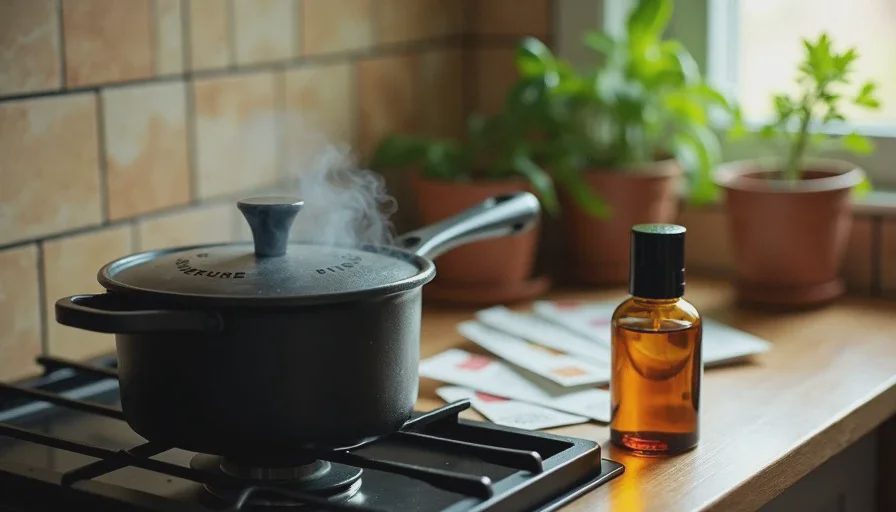
If you've ever read a fragrance description and felt like it was written in a language you were supposed to already know, this top heart base notes guide is for you. I'm Claire, and I've spent eight years learning to smell — not through courses or certifications, but through cooking, testing, and making mistakes on my own skin. The single thing that made fragrance structure click for me wasn't a chart or a wheel. It was soup.
Fragrance Is Built Like a Meal
A fragrance has three layers, and they reveal themselves in order — just like the experience of eating a bowl of soup you've spent an hour making.
The Three Layers, Side by Side
Think about it this way:
Layer | In Fragrance | In Soup | When You Notice It |
|---|---|---|---|
Top notes | The first thing you smell after spraying | The steam that hits you when you lift the lid | Immediately, 0-15 minutes |
Heart notes | The core character of the scent | The main flavor when you take a spoonful | 15 minutes to 2-3 hours |
Base notes | What lingers after everything else fades | The coating on the spoon after you finish | 3+ hours, sometimes next day |
Top notes are the volatile, quick-evaporating molecules that hit your nose first. They're the citrus spritz, the herbal burst, the thing that makes you go "oh!" when someone walks past. In cooking terms: when you lift the lid off a simmering pot and that first wave of steam hits your face — that's your top note. It's bright, it's immediate, and it's gone fast.
Heart notes are the actual personality. In soup, this is the flavor you taste when the spoon reaches your mouth — the thing the soup actually is. In fragrance, this is where you find the florals, the spices, the fruits that define what a scent is trying to be. If a fragrance is "rose and patchouli," the rose is probably living in the heart.
Base notes are what's left. When you finish the soup and set the spoon down, there's a residue — the fat, the caramelized bits, the depth. That's your base. In fragrance, these are the heavy molecules: woods, resins, musks, ambers. They anchor everything else, and they're what you smell on your scarf the next morning.
Why This Matters When You're Shopping
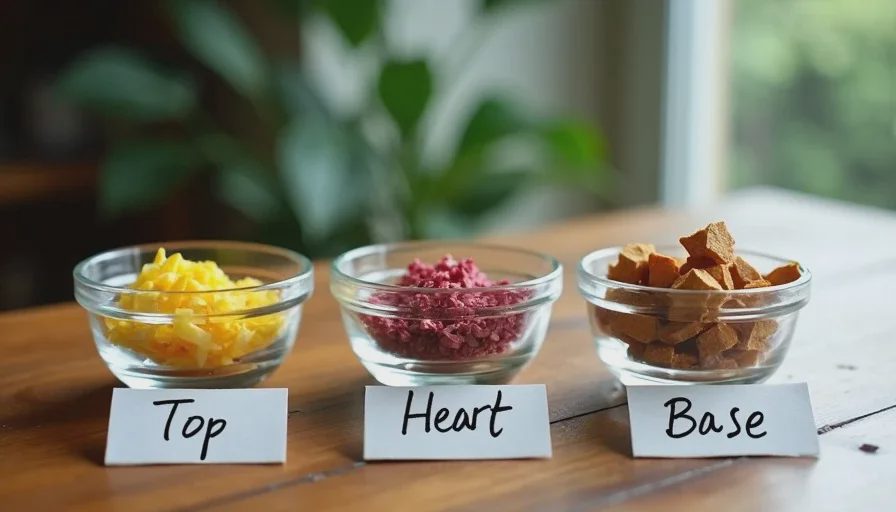
Understanding this structure changes how you test perfume — because if you only smell the first thirty seconds, you're only meeting the top notes.
The Counter Spritz Trap
Here's what happens at a fragrance counter: you spray a strip, you smell it, you decide. But you've only met the top notes. You haven't met the heart or the base yet. It's like smelling the steam from a soup pot and declaring you know what the whole bowl tastes like.
I fell for this exact trap too. I once bought a fragrance because its top notes were a gorgeous bergamot and pink pepper — bright, sparkling, alive. What I didn't know was that under those top notes sat a heart of heavy iris and a base of smoky leather that, on my skin, smelled like a saddle in a rainstorm. I paid $130 to find that out.
Here's my testing protocol, built from that kind of lesson:
Spray the strip — smell it once, write down what you notice, then set it aside. This is just identification.
Spray your wrist — one spray, inner wrist, no other fragrance competing.
Wait 15 minutes before judging. Let the top notes burn off.
Smell again at the 1-hour mark — this is the heart. Does it still interest you?
Check at 4 hours — this is the base. Is it something you want to carry all day?
Smell the strip again for comparison — the gap between strip and skin tells you about your own chemistry.
Nate, my partner, thinks this is excessive. He once described the process as "weirdly intense for something that's supposed to be fun." He's not wrong. But I've saved thousands of dollars by being weirdly intense, so I'll take it.
Common Materials in Each Layer
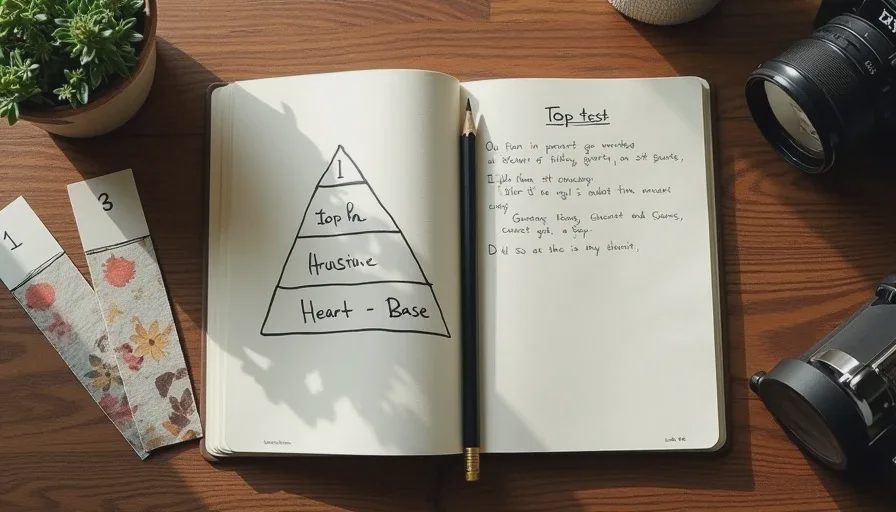
Once you understand the structure, the material names start making sense. Here are some you'll see often.
Top Note Materials
Citrus oils — bergamot, lemon, grapefruit. Bright, sharp, gone within 20 minutes.
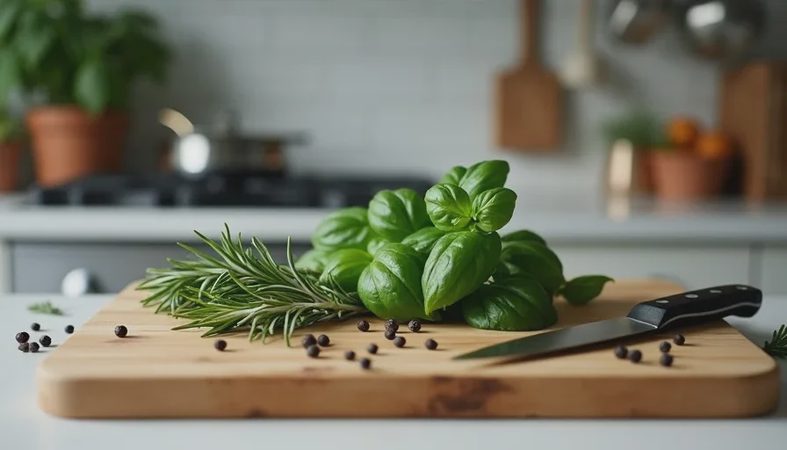
Herbal notes — mint, basil (I grow this on my windowsill, so I know exactly what fresh basil smells like versus the dried version in a bottle), lavender.
Green notes — freshly cut grass, crushed leaves. Sharp and fresh.
Heart Note Materials
Florals — rose, jasmine, iris, tuberose. These are the personality scents.
Spices — cardamom, cinnamon, pink pepper. Warm and textured.
Fruits — fig, peach, apple. Softer and rounder than citrus tops.
Base Note Materials
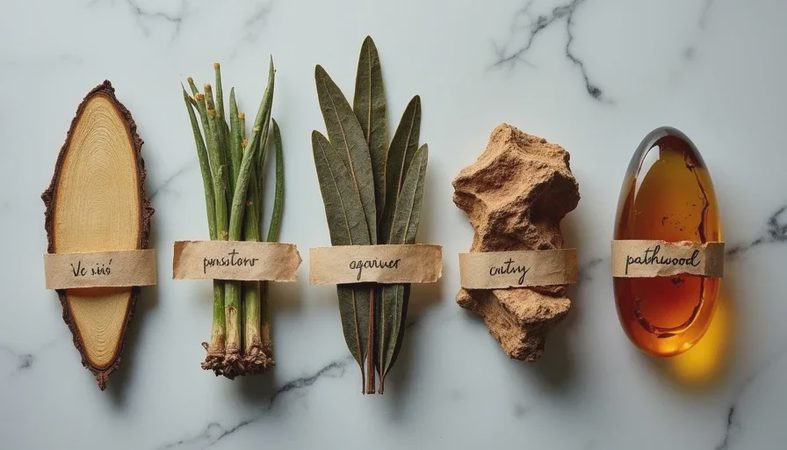
Woods — sandalwood, cedar, vetiver. I'll do a whole post on vetiver someday — it's one of those materials that smells completely different depending on how it's used.
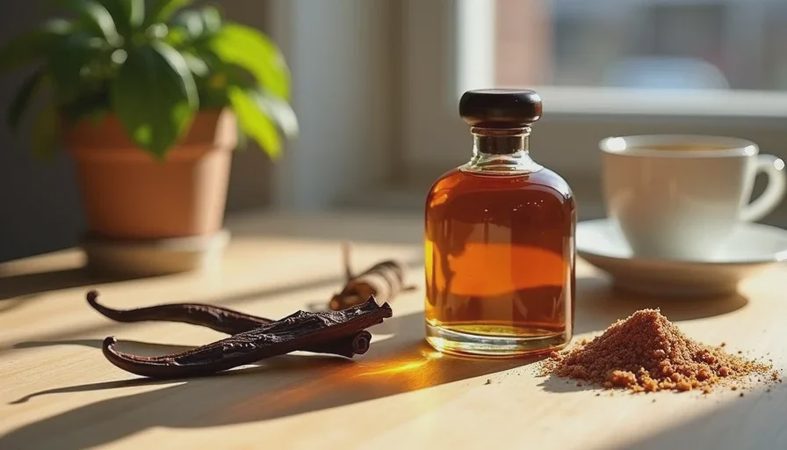
Resins — frankincense, myrrh, amber. Deep, warm, sticky-sweet.
Musks — the clean-laundry kind, the warm-skin kind, the animalic kind. These are what make a fragrance feel "cozy" or "intimate."
This top heart base notes guide isn't meant to make you an expert. It's meant to give you a map — so when you read "bergamot, lavender, and cedarwood" on a description card, you know you're looking at a citrus top, a herbal heart, and a woody base. You can imagine the shape of the scent before you ever smell it.
Tried it. Lived with it. Then I'll tell you if it's worth it.
That goes for understanding structure too. Read the map, but trust your own nose.
No comments yet — be the first to share a thought.