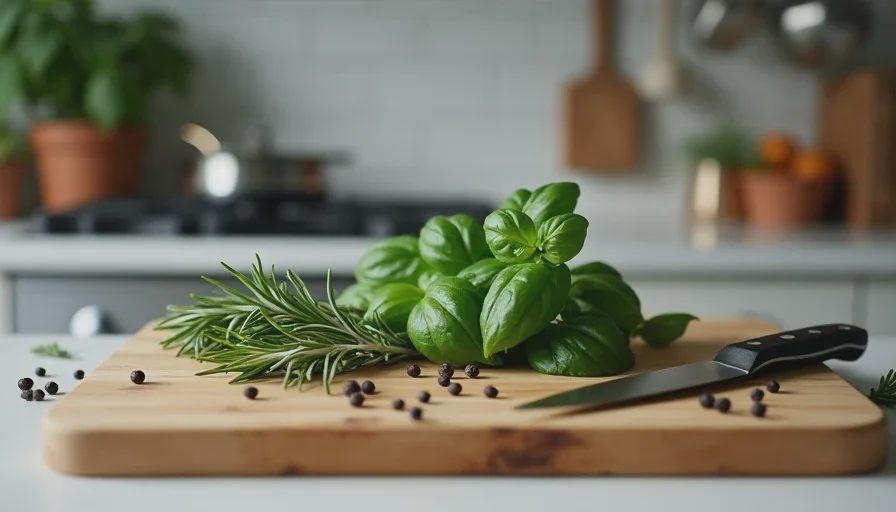
If you have ever cooked with fresh herbs, you already know more about perfume notes explained than you think. I do not mean that as motivation-speak. I mean it literally. The rosemary you chopped for roast potatoes, the basil you tore for tomato salad, the thyme you sprinkled on roasted carrots — each of those moments was a scent lesson. You were learning top notes, heart notes, and base notes through your hands and your stove. You just did not have the vocabulary for it yet. This article is about connecting what your kitchen already taught you to the language of fragrance, so the next time you read a notes pyramid, it actually means something.
Your Spice Rack Is a Fragrance Kit
I realized this one evening while making soup. I had rosemary, thyme, and basil on the counter, and I was adding them at different stages of cooking. Rosemary went in early because it needed time to soften and release its oils. Basil went in at the very end because if you cook it too long, it loses everything. Thyme went in the middle. And as I stood there adding herbs in sequence, it hit me: I was building a fragrance pyramid.
The Cooking-to-Fragrance Parallel
Here is how cooking with herbs maps directly onto how fragrances are structured:
Cooking Stage | What Happens to the Herb | Fragrance Equivalent |
|---|---|---|
Torn or crushed raw | Volatile oils release immediately, intense and bright | Top notes — citrus, herbs, the first impression |
Simmering in liquid | The sharp edges soften, the core character emerges | Heart notes — the main body of the fragrance |
Long, slow cooking | Deep, woody, resinous qualities remain; freshness is gone | Base notes — woods, resins, the dry-down |
If you have cooked with herbs, you have already experienced this arc. You know that basil is brightest when raw and disappears when overcooked. You know that rosemary can take heat and time. You know that thyme sits somewhere in between. That knowledge is fragrance knowledge. It just lives in your kitchen instead of on a perfume shelf.
Three Herbs, Three Note Positions
Let me break down the three herbs I grow and how they function in fragrance:
Basil — A top-to-heart note. Bright, sweet, slightly peppery. In fragrance, basil opens things up the way it opens a dish — with a burst of green freshness that does not last long but makes everything after it feel more alive.
Rosemary — A heart note. Camphoraceous, green, woody. Rosemary sits in the middle of a fragrance the way it sits in a stew — providing structure and a backbone that other notes build around.
Thyme — A heart-to-base note. Sharp, medicinal, earthy. Thyme is the bridge between the bright top and the dark base, just as it bridges the early and late stages of cooking.
These are not rigid categories. Perfumers use herbs flexibly. But if you understand where each herb tends to sit in a composition, you can predict how a fragrance will develop before you ever spray it.
From Stove to Skin: Real Fragrance Examples
Let me make this concrete. I am going to walk through three fragrances from my collection and show how the herb notes in each one behave exactly the way they do in cooking.
The Basil-Forward Fragrance
I have a decant of a fragrance that leads with basil and bergamot in the top, with a soft lavender heart and a white musk base. On paper, it smells like a garden in July. On skin, the basil is vivid for about twenty minutes — sweet, green, almost edible — and then it folds into the lavender. By hour two, it is a clean musk skin scent.
This is exactly what basil does in cooking. It is the note you add last, the one that sings for a moment and then steps back. If you have ever made pesto and noticed how the bright green flavor mellows after an hour, you know what basil does in fragrance. The perfumer who built this composition understood that about basil, and they placed it accordingly.
The Rosemary-Structured Fragrance
Another fragrance in my rotation uses rosemary as its structural spine. The top is grapefruit and rosemary, the heart is rosemary and cedar, and the base is vetiver and musk. Rosemary appears in every tier. It is the through-line, the ingredient that holds the composition together.
When I cook with rosemary, I add it early and let it permeate the dish. It does not dominate — it supports. In this fragrance, it does the same thing. The grapefruit is louder at first, but rosemary is there underneath, and as the grapefruit fades, the rosemary remains, connecting the bright opening to the woody base. Nate smelled this one and said, "It smells like something you'd cook with, but fancy." He was not wrong.
Why This Makes Fragrance Less Intimidating
Fragrance content can feel alienating because it uses a vocabulary that seems specialized — sillage, projection, dry-down, olfactive families. But underneath that vocabulary is something you already understand if you cook. You know what it means for a scent to develop over time because you have watched a pot of soup change character over two hours. You know what it means for a note to be "bright" because you have smelled fresh basil. You know what "woody" means because you have handled rosemary stems.
A Practical Exercise
Here is something I did that helped me, and that I recommend to anyone who finds fragrance intimidating:
Pick three fresh herbs from the store (or grow them, if you have a windowsill)
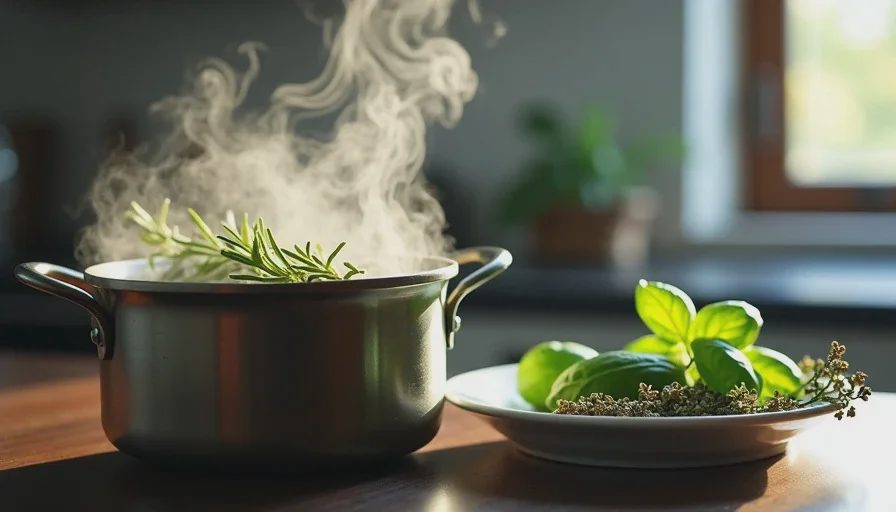
Smell each one raw, then crushed, then after simmering in hot water for ten minutes
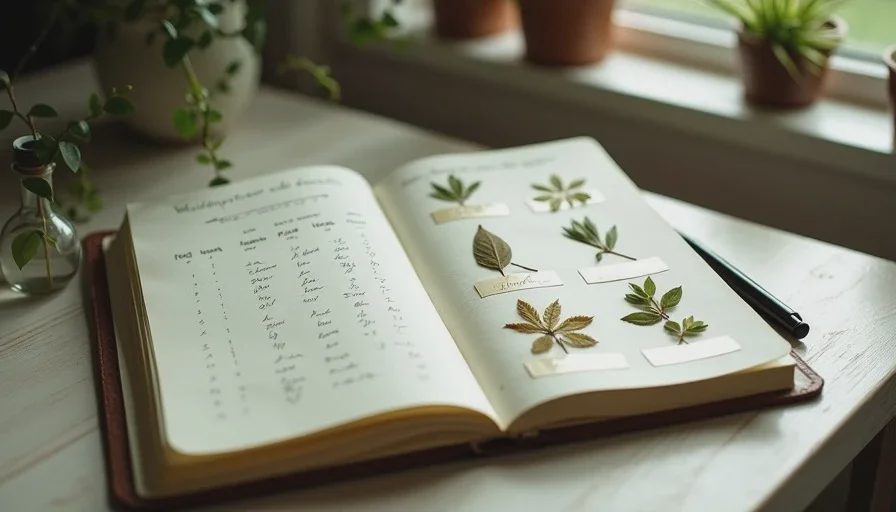
Write down one word for each stage
The next time you test a fragrance, look for those words in your own experience
You do not need to memorize a fragrance wheel. You do not need to know what a perfumer means by "aromatic fougere." You need to trust your own sensory memory, because it is richer and more accurate than any technical framework. Your kitchen has been teaching you fragrance for years. The vocabulary is just a way of naming what you already know.
Tried it. Lived with it. Then I'll tell you if it's worth it. — You do not need a fragrance education to understand fragrance. You need to pay attention to what you already smell every day. Start with your spice rack. It is a more honest teacher than any influencer.


No comments yet — be the first to share a thought.